
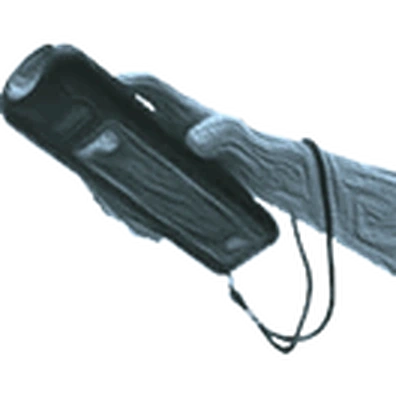
Long-wave and short-wave UV
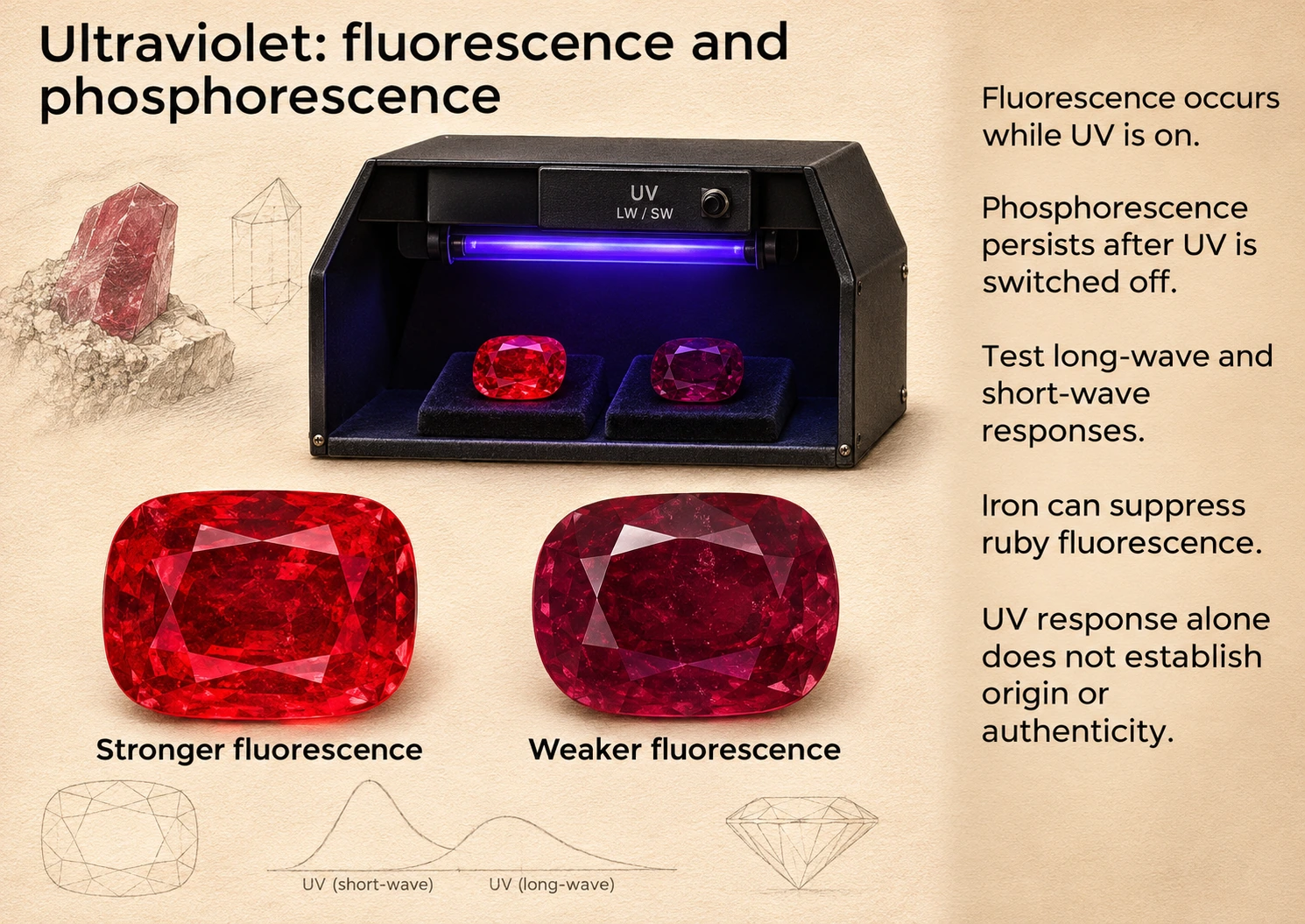
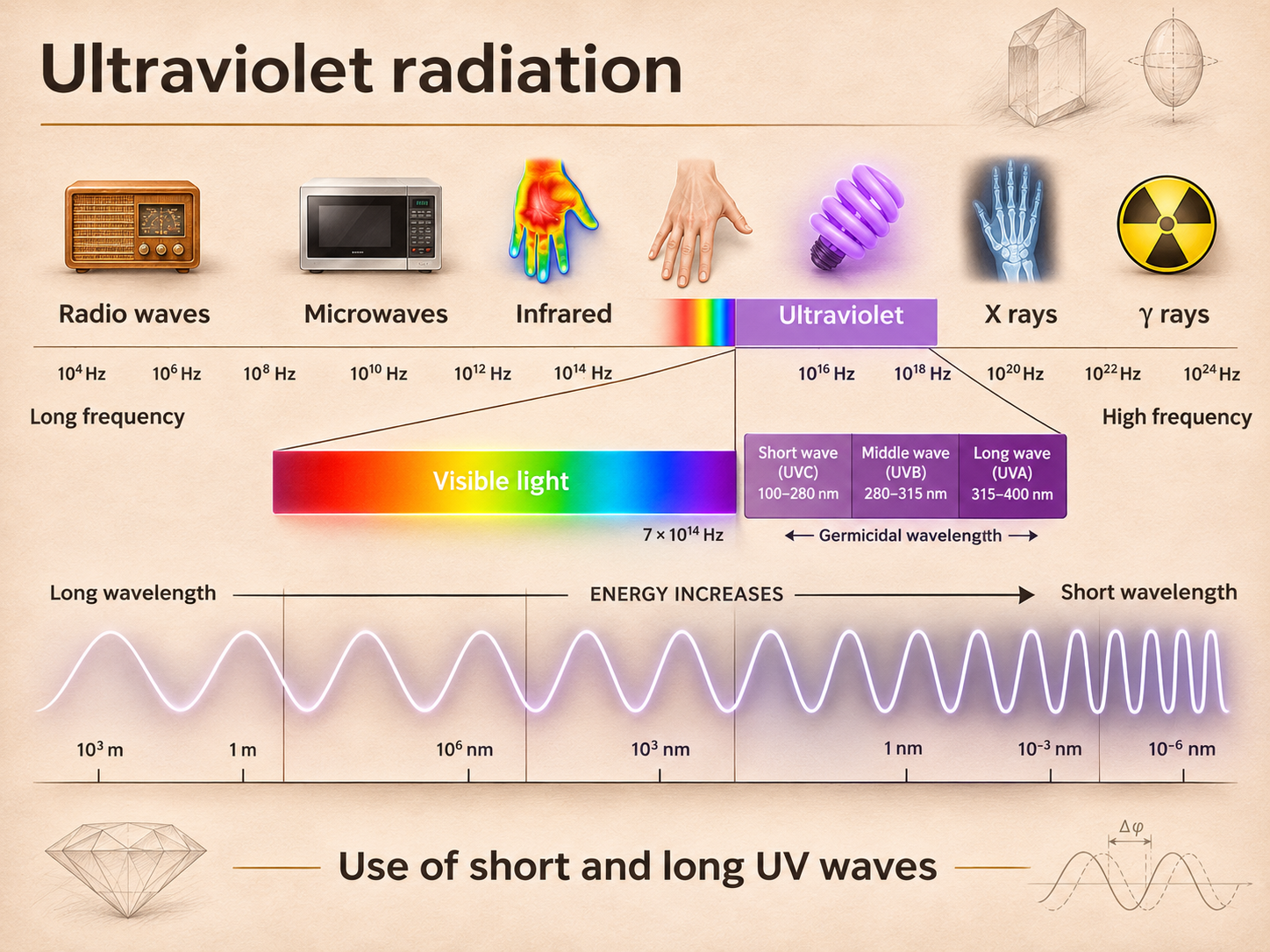
Many gem laboratories compare fluorescence under different UV bands. Excitation wavelength, intensity, source design and viewing conditions affect the result.
Observe and record
Compare the stone under controlled conditions with the visible source excluded. Record emission colour, distribution and relative strength.
Safety and interpretation
Protect eyes and skin from UV exposure, especially short-wave sources. Fluorescence is not a stand-alone determination of mineral identity or treatment.
Illustrated guide
Frequently asked questions
Does UV fluorescence prove a ruby is natural?
No. Both natural and laboratory-grown rubies can fluoresce; the response must be combined with other observations.