

What pleochroism means
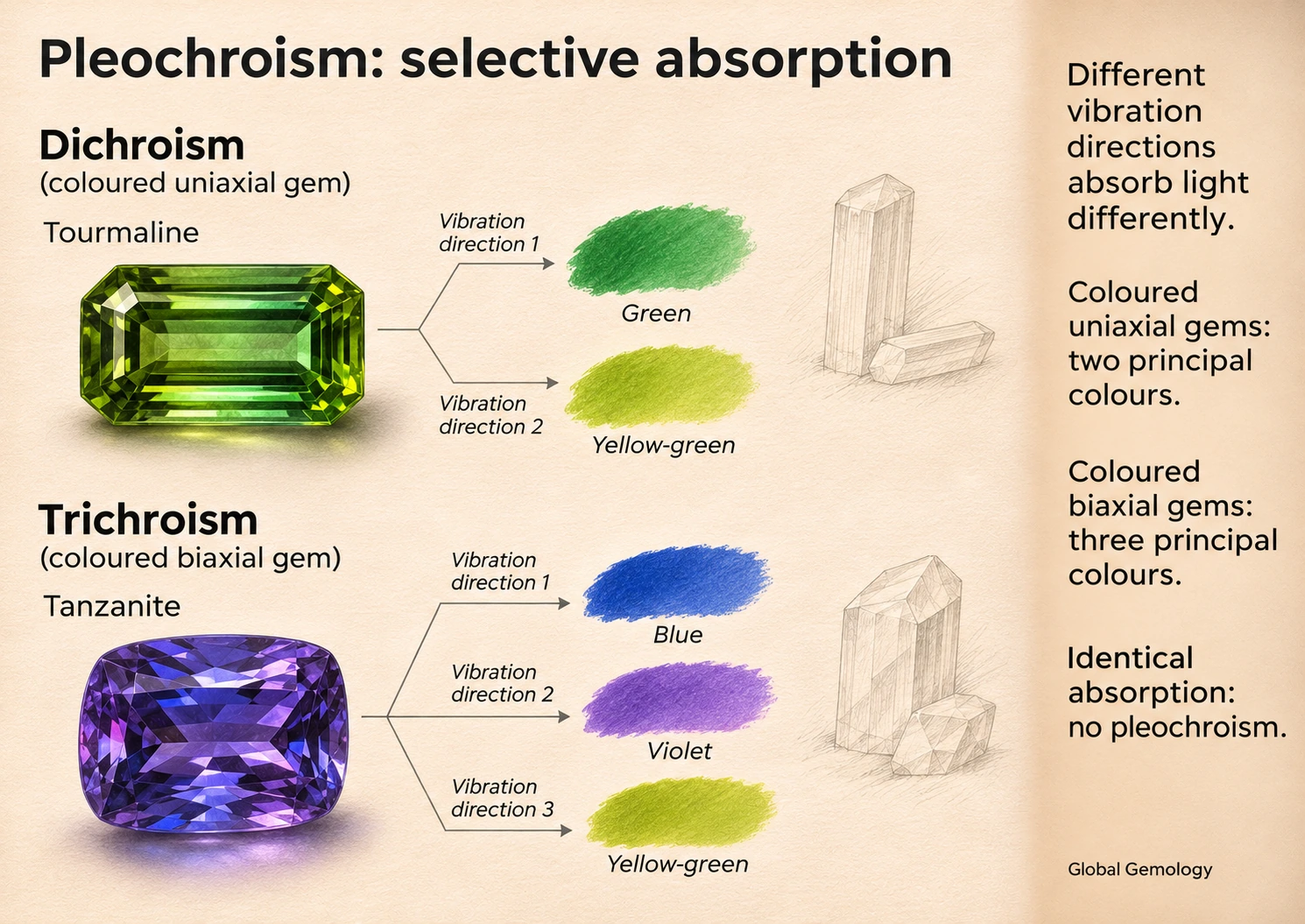
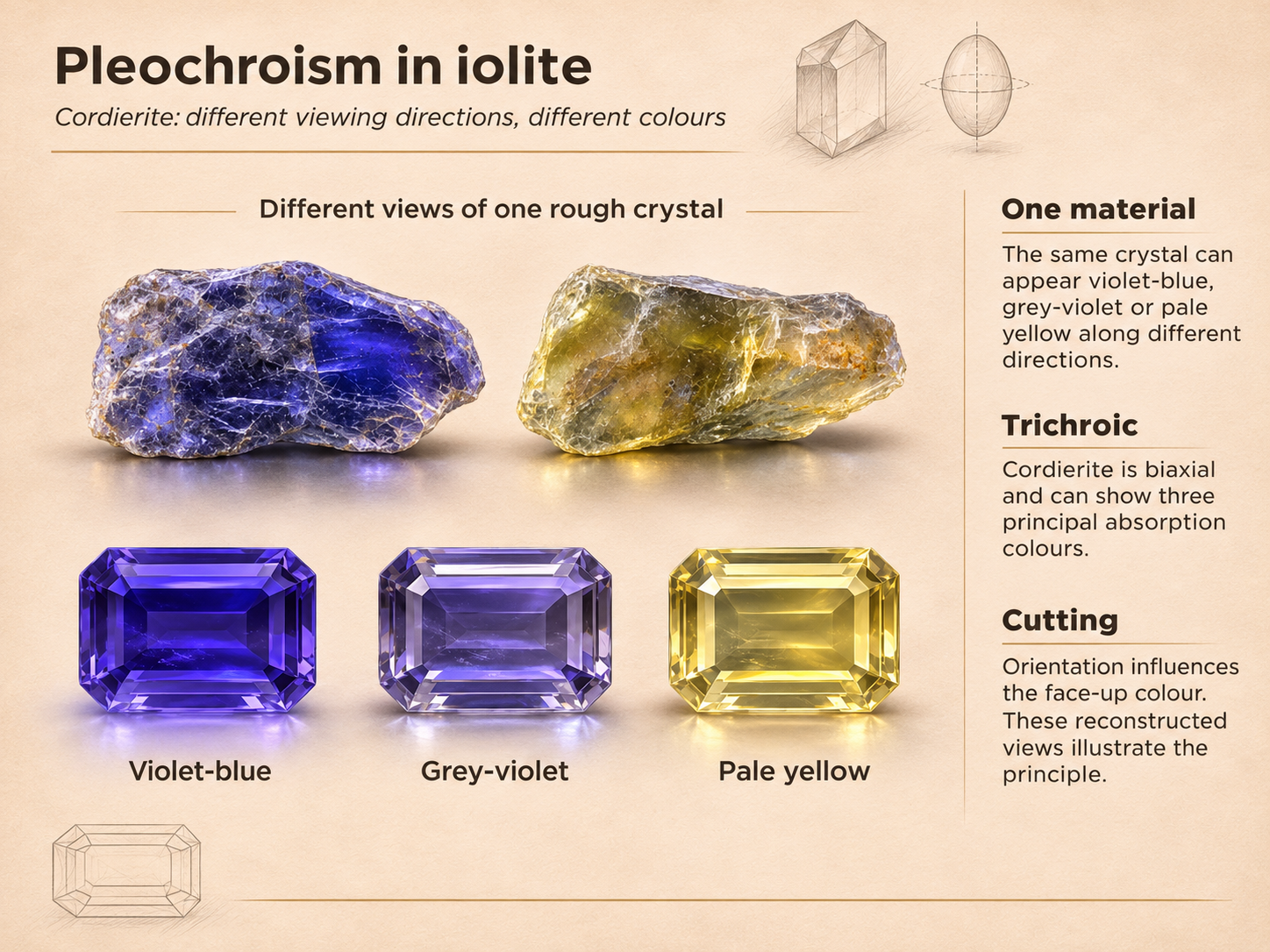
Pleochroism is a directional difference in the colours transmitted by a mineral. The colours arise from wavelength-selective absorption and vary with viewing orientation.
How to observe
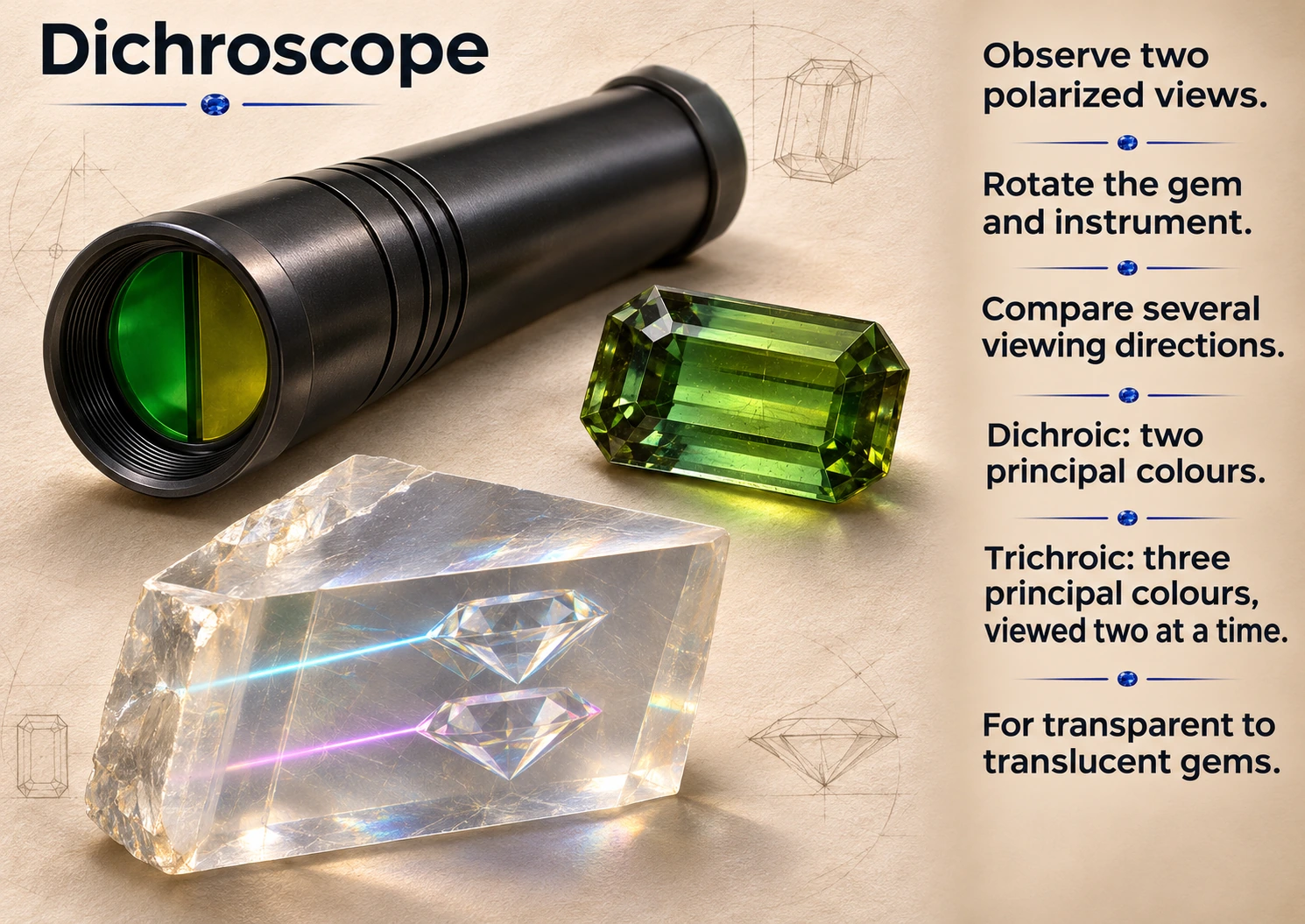
View a suitable transparent gem with the dichroscope against a bright, neutral light source. Rotate the gem and instrument to compare the colours in the adjacent windows.
Use with other tests
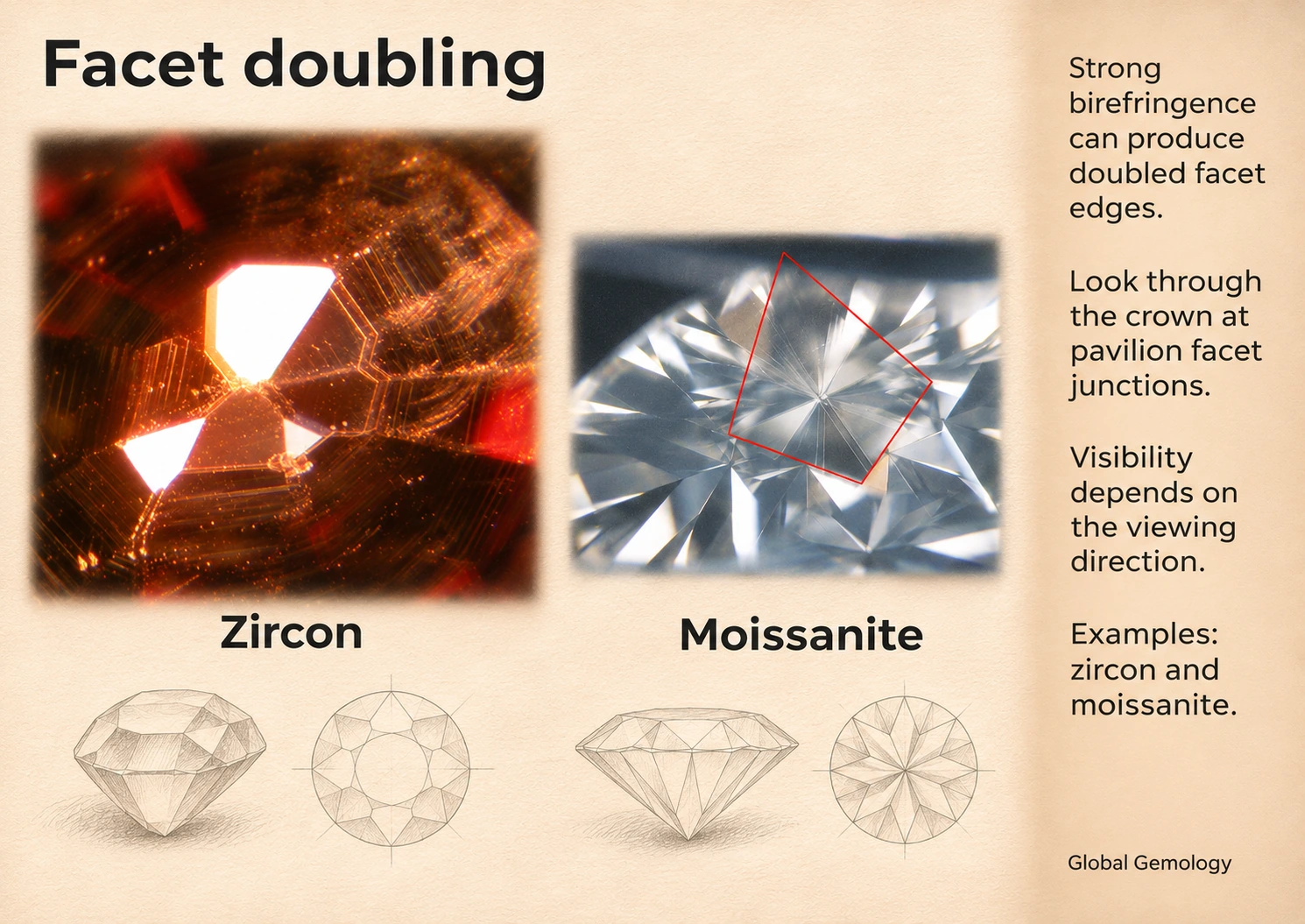
A strong dichroic or trichroic response can support identification, but absence of a visible difference does not prove optical isotropy.
Illustrated guide
Frequently asked questions
Which gemstones may show strong pleochroism?
Examples include iolite (cordierite), tanzanite and some tourmalines, depending on orientation and composition.