Global Institute of Gemology • Gemology Tools
GIGA logoGIGAToolsGlobal Institute of Gemology
INTERFERENCE FIGURES / OPTIC AXES

Conoscope

Used alongside a polariscope, a conoscope permits observation of interference figures. Their shapes and changes during rotation help distinguish optical types and optic axes.

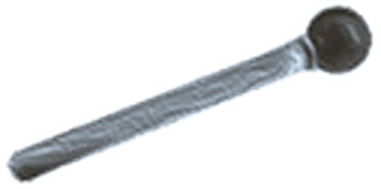
Conoscope instrument, cut out from the original photographic collection

Preparing an interference figure

Place the gem between crossed polarisers, locate a suitable orientation and observe through the conoscope sphere.

Uniaxial and biaxial patterns

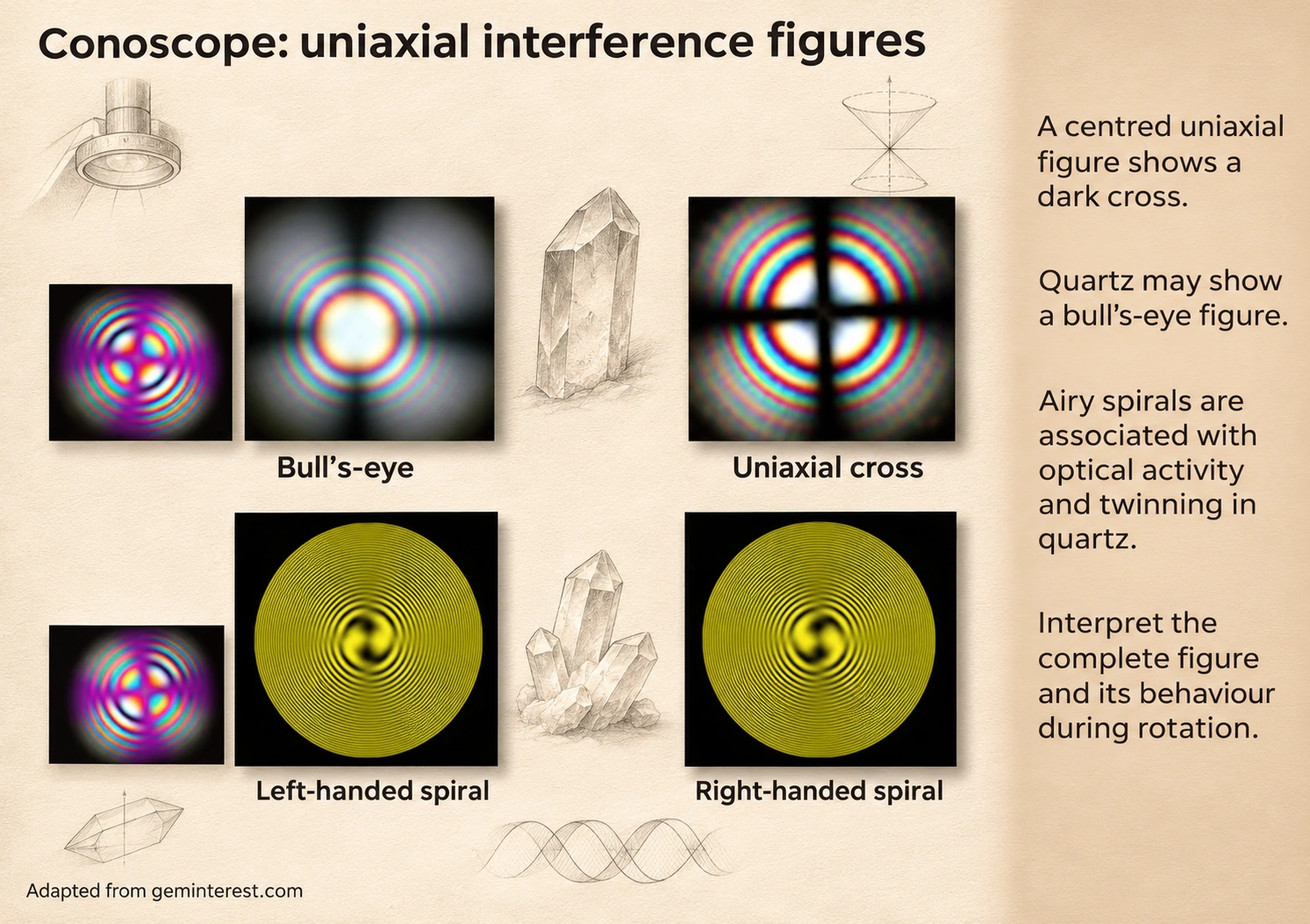
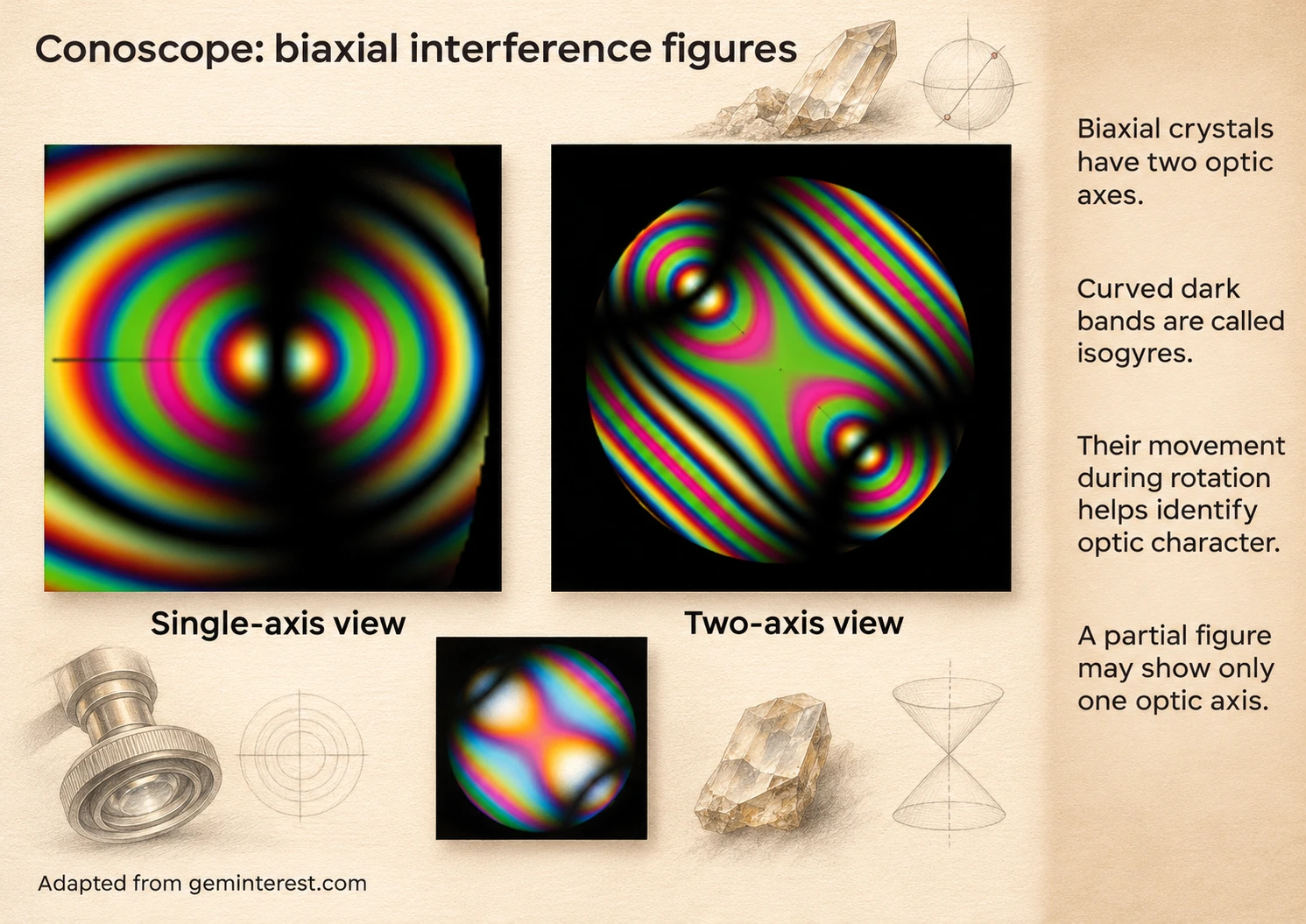
A centred uniaxial figure may show a dark cross and concentric colour bands; a biaxial figure often exhibits separated, curved isogyres.

Avoid single-image conclusions

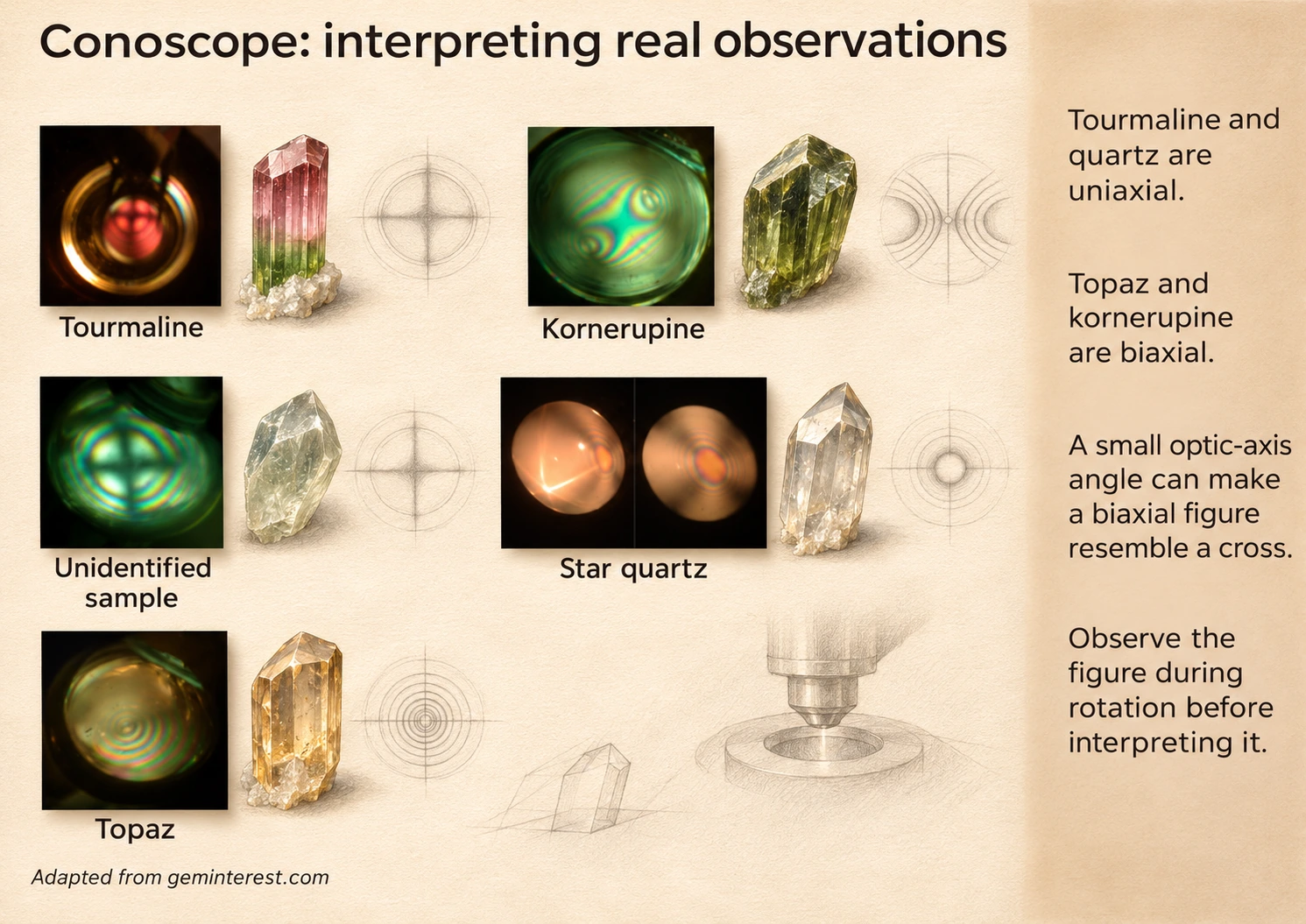
Apparent figures change with orientation, optic angle, strain and twinning. Observe movement across multiple orientations before interpreting.

Illustrated guide
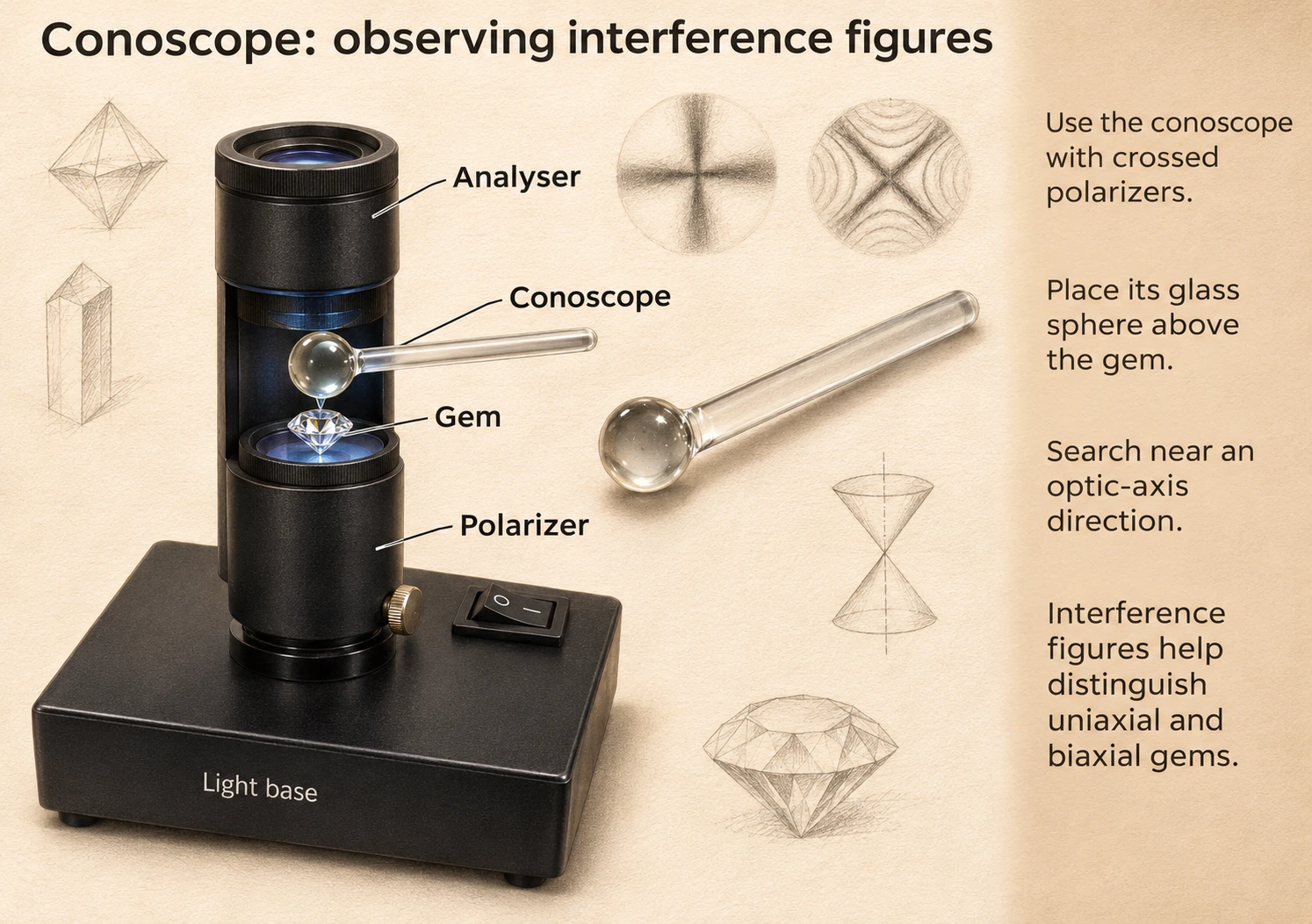
Observing interference figures — illustrated gemology guide
Observing interference figures
Uniaxial interference figures — illustrated gemology guide
Uniaxial interference figures
Biaxial interference figures — illustrated gemology guide
Biaxial interference figures
Interpreting real interference figures — illustrated gemology guide
Interpreting real interference figures
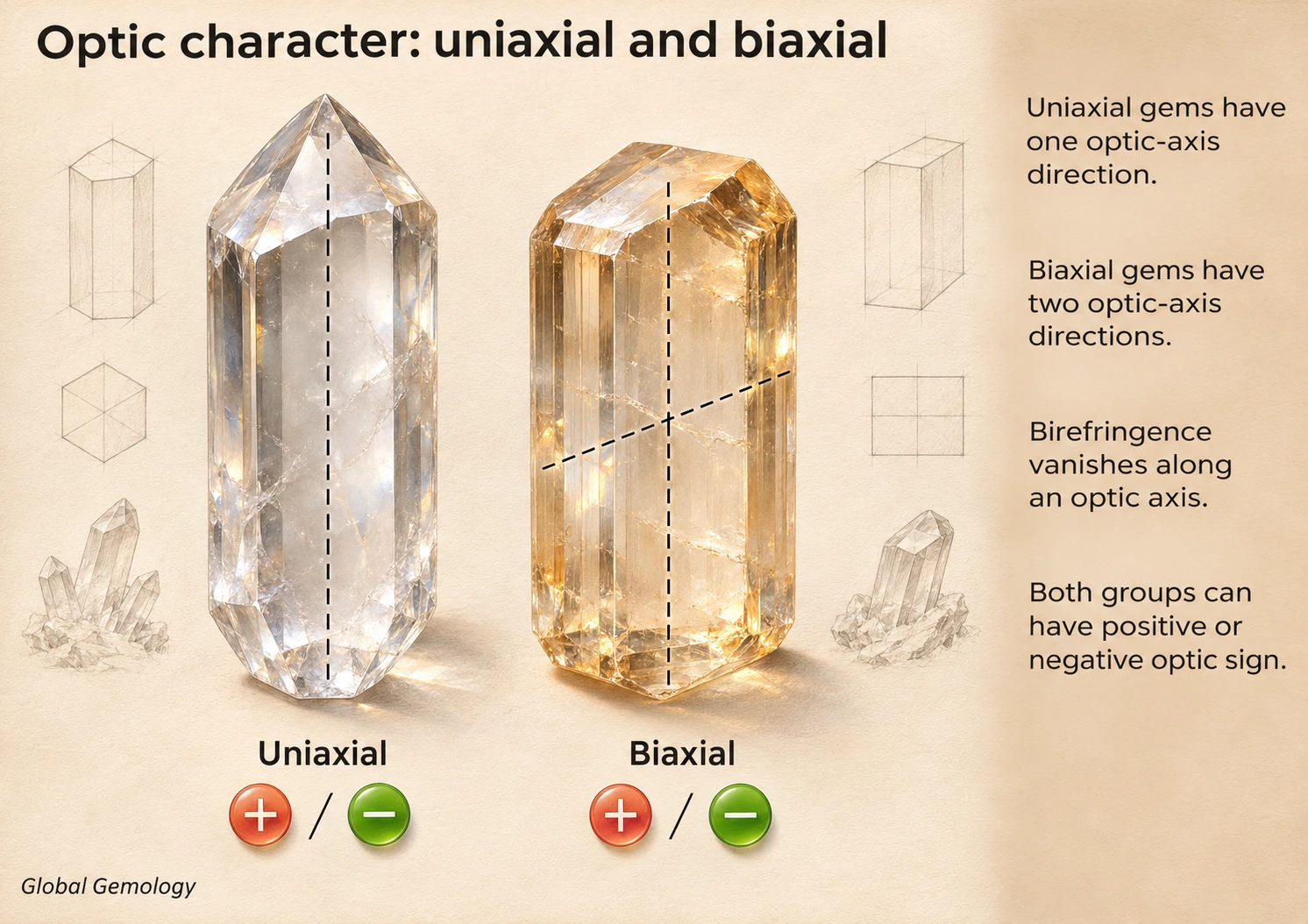
Uniaxial and biaxial optical character — illustrated gemology guide
Uniaxial and biaxial optical character

Frequently asked questions

Do all gemstones show an interference figure?

No. The appearance depends on the material and whether a suitable optic-axis orientation can be found.