Global Institute of Gemology • Gemology Tools
GIGA logoGIGAToolsGlobal Institute of Gemology
ADVANCED INSTRUMENTAL ANALYSIS

Laboratory Gemology

Professional gem laboratories combine microscopy, spectroscopy and chemical analyses to investigate gemstone identity, origin evidence and treatment features.

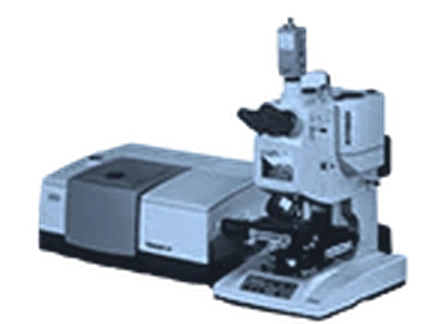
Gemology laboratory instrument, cut out from the original photographic collection

Spectroscopic methods

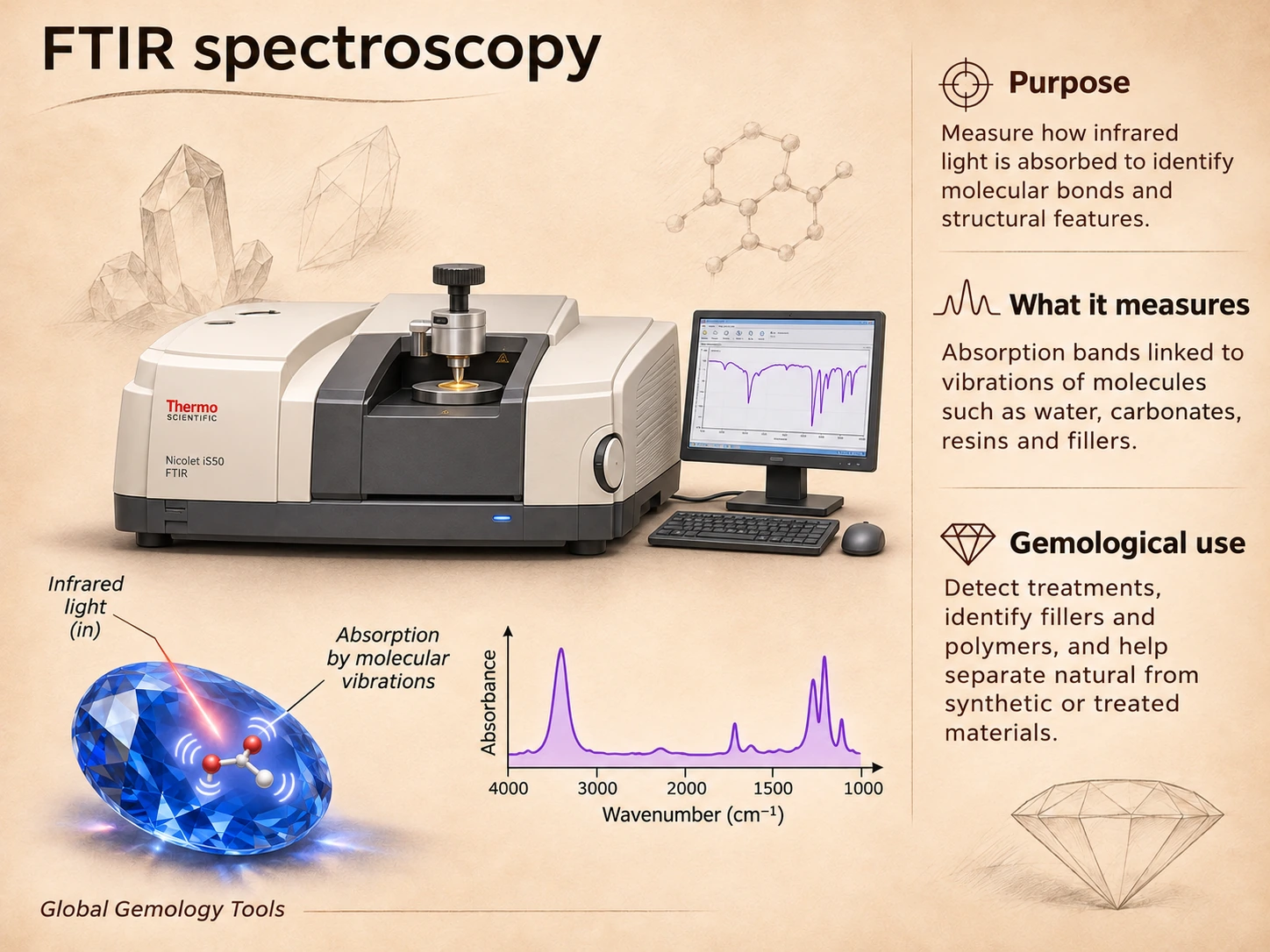
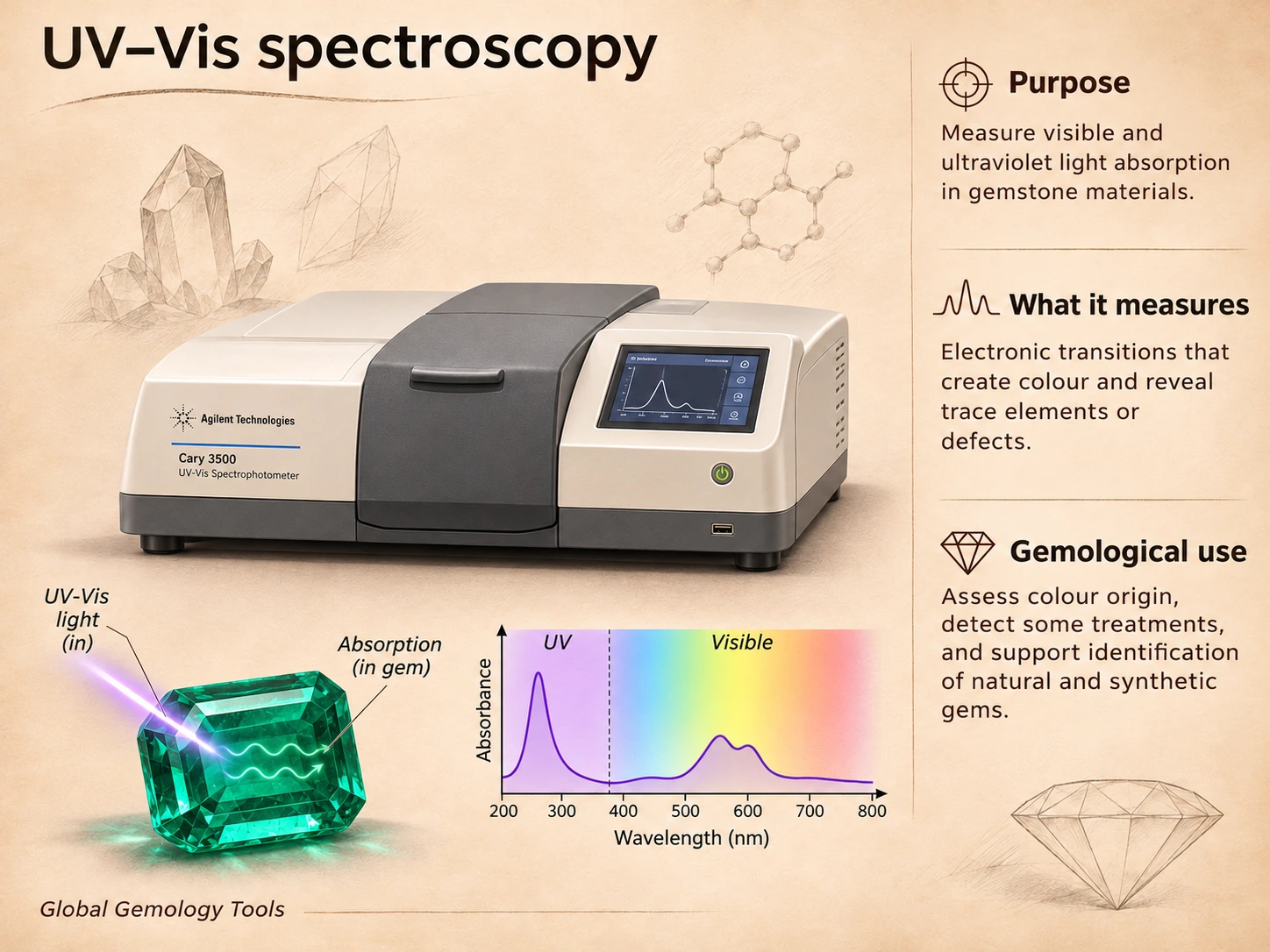
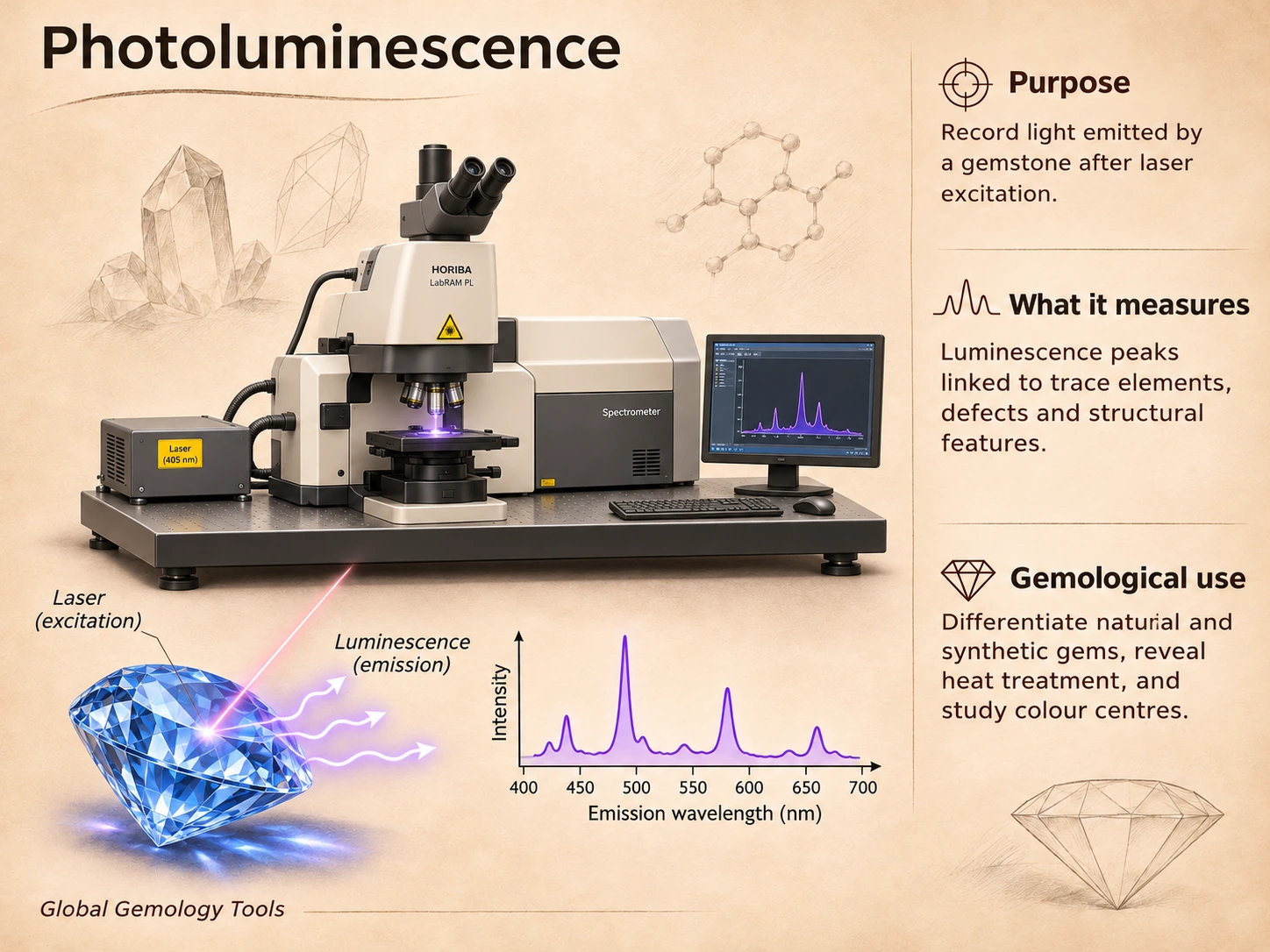
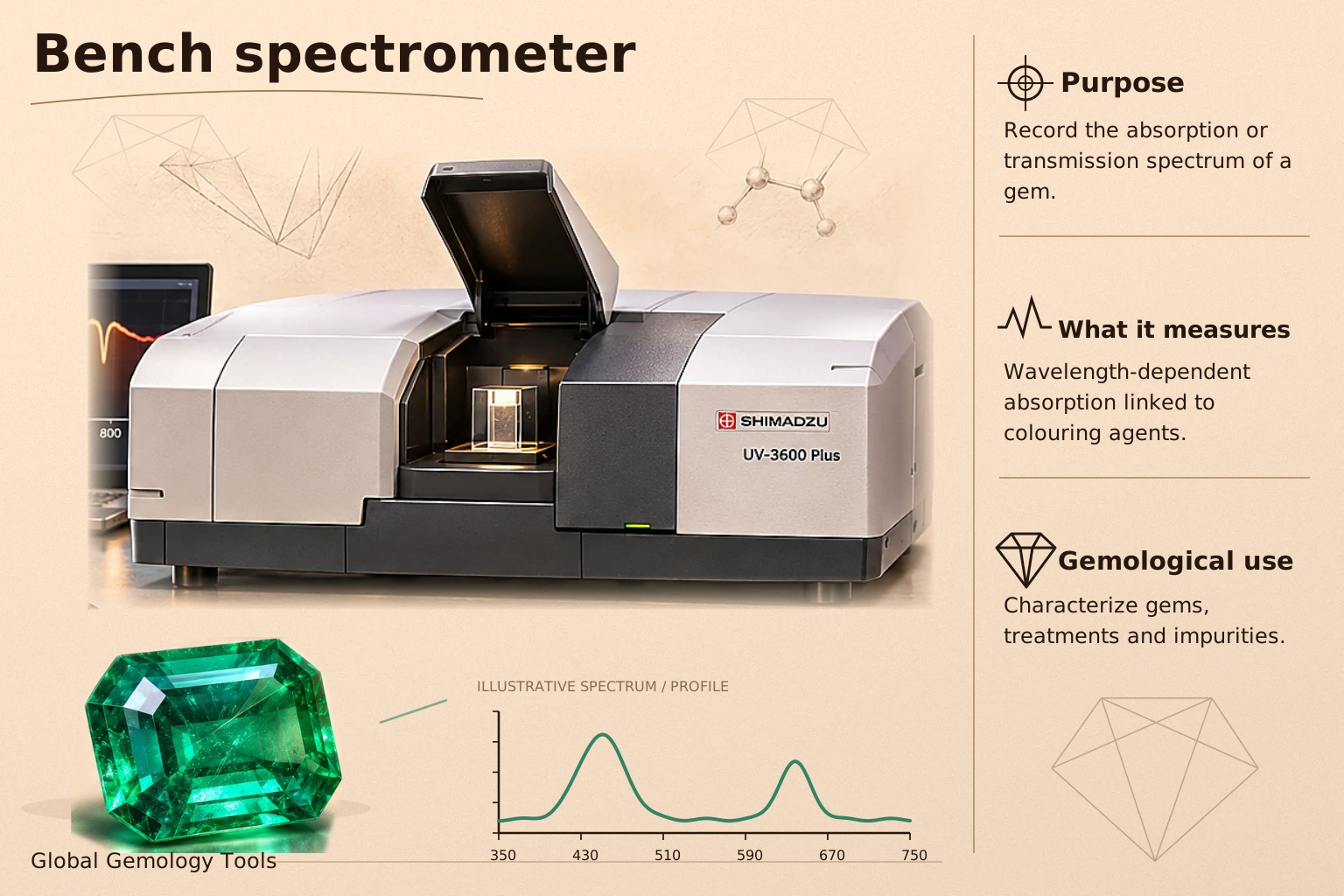
Raman, FTIR, UV–Vis and photoluminescence provide different kinds of spectral information. Each technique has strengths and limitations.

Chemical and structural methods

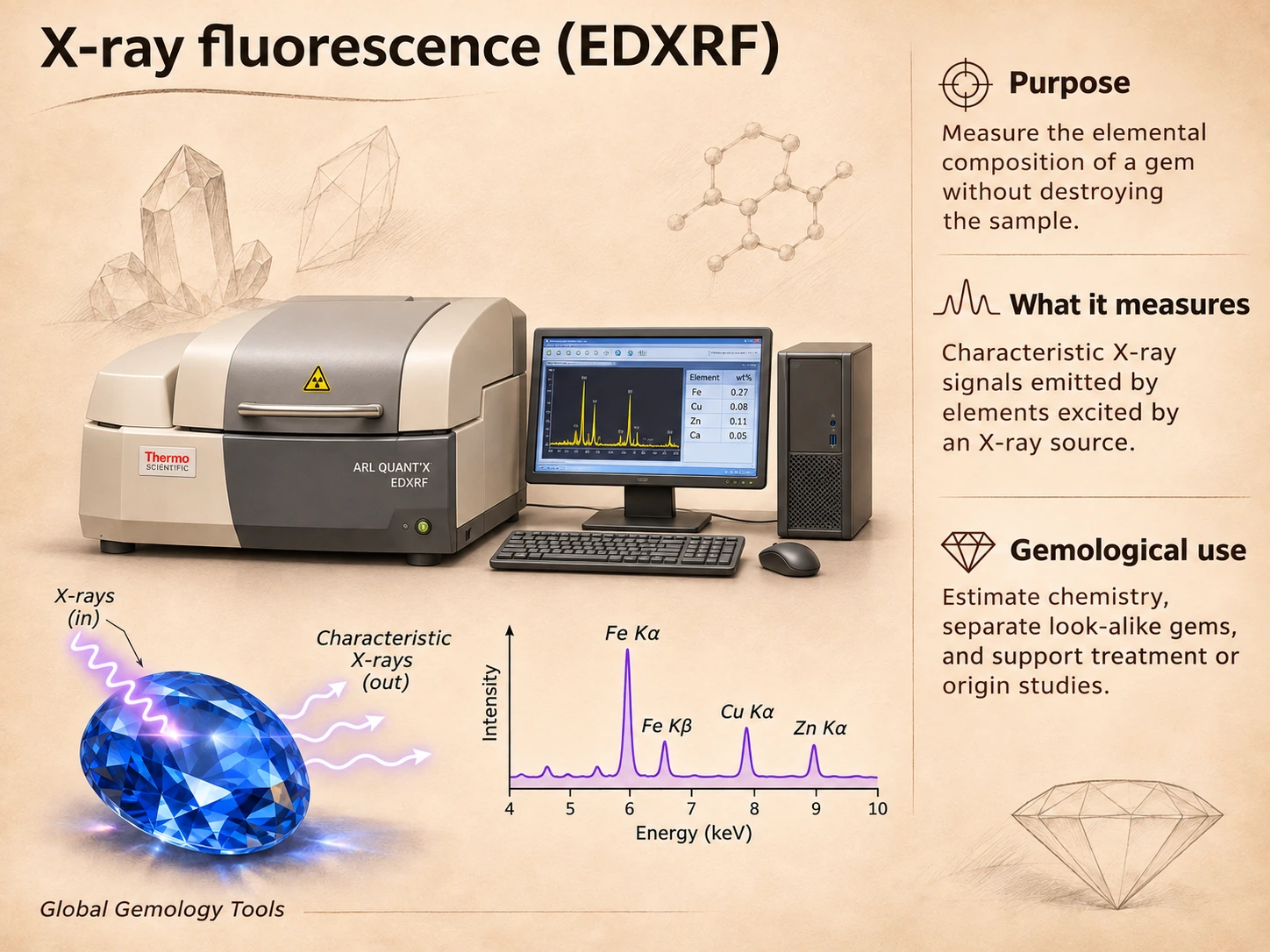
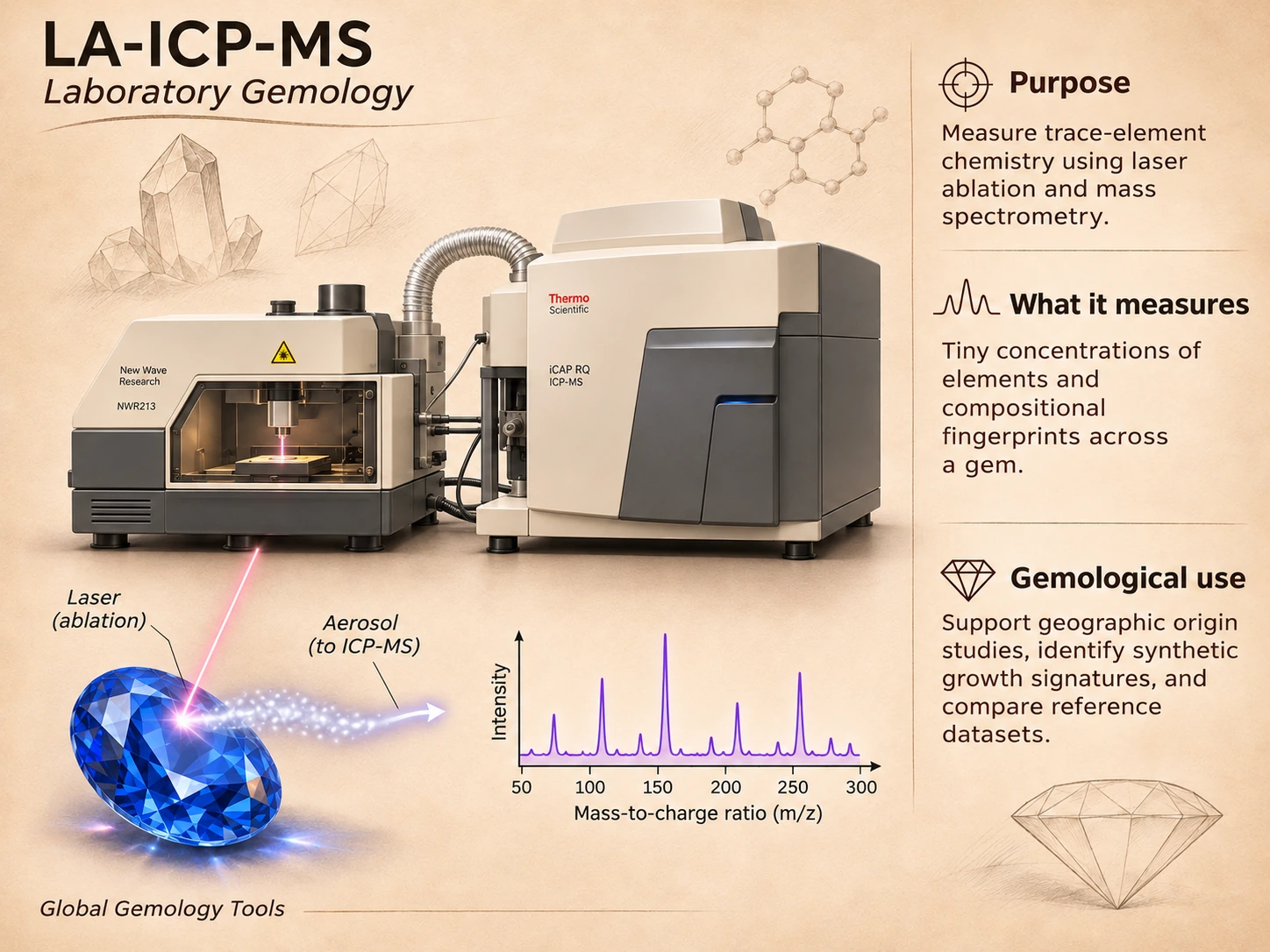
X-ray fluorescence, LA-ICP-MS and related methods help characterise elemental composition. Interpret analytical data with appropriate references and calibration.

Integrated interpretation

Reliable laboratory reporting depends on validated methods, trained analysts and comparison with complementary evidence.

Illustrated guide
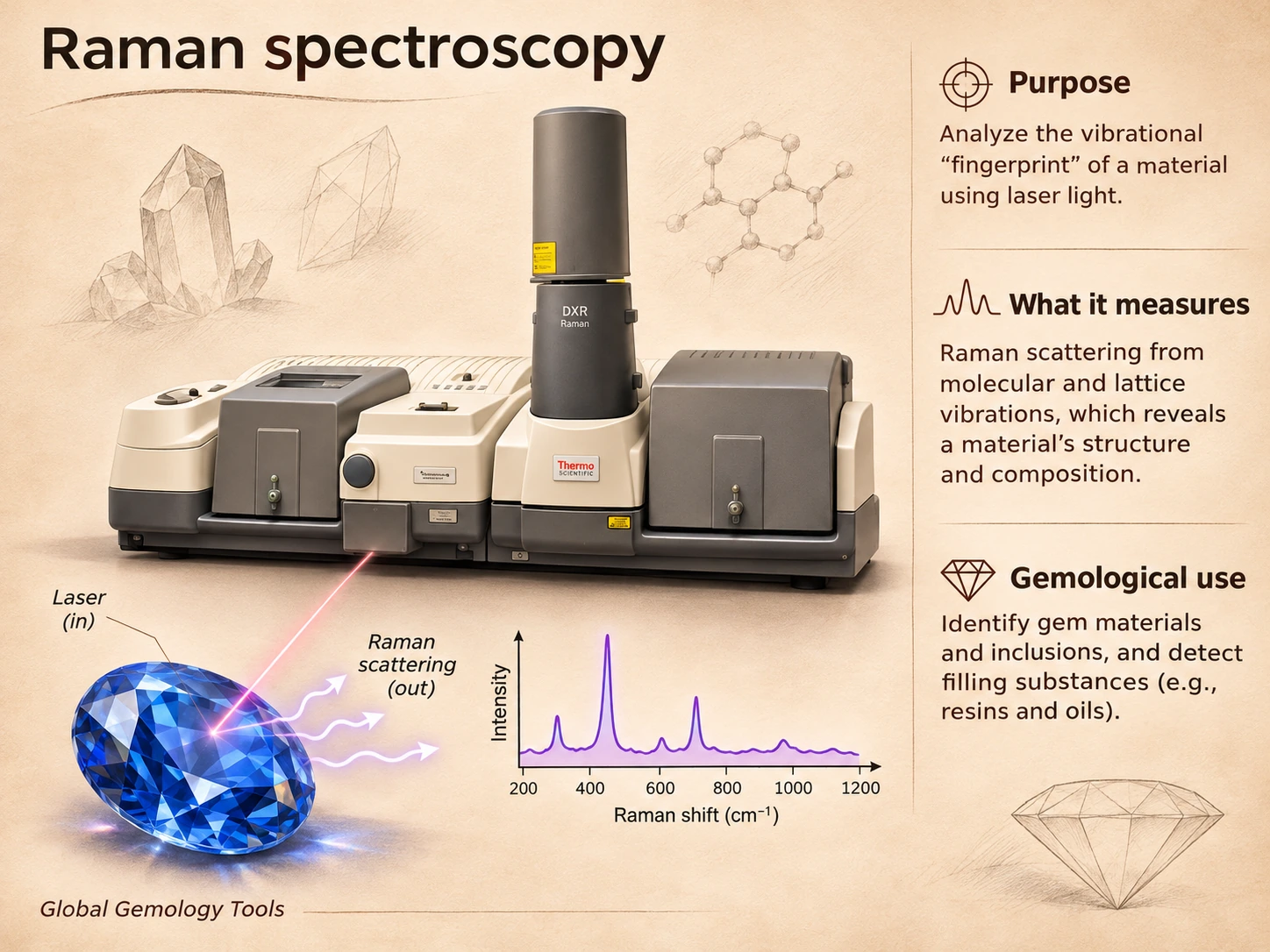
Raman spectroscopy infographic
Raman spectroscopy
FTIR spectroscopy infographic
FTIR spectroscopy
UV-Vis spectroscopy infographic
UV-Vis spectroscopy
Photoluminescence infographic
Photoluminescence
X-ray fluorescence EDXRF infographic
X-ray fluorescence (EDXRF)
LA-ICP-MS infographic
LA-ICP-MS
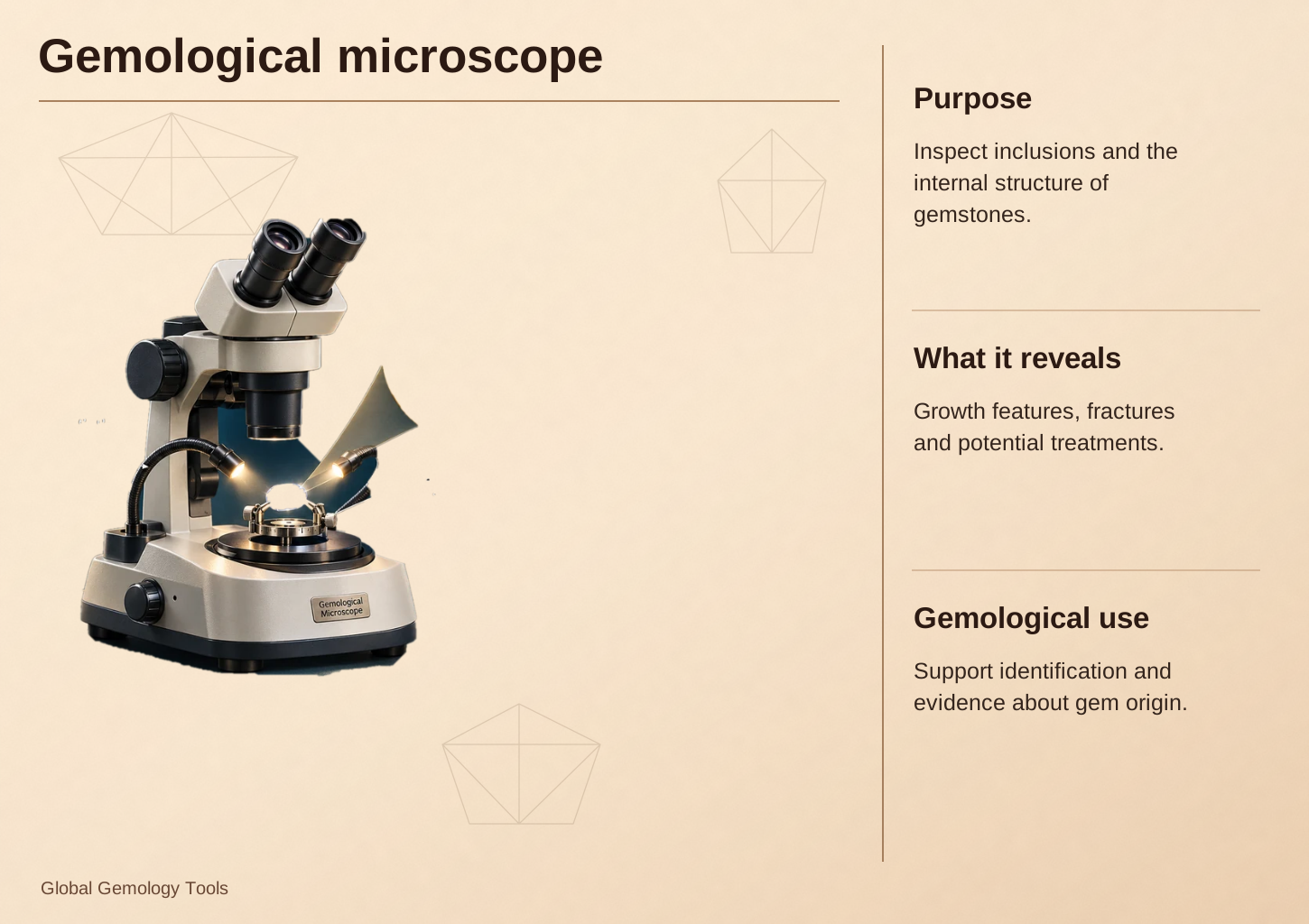
Gemological microscope
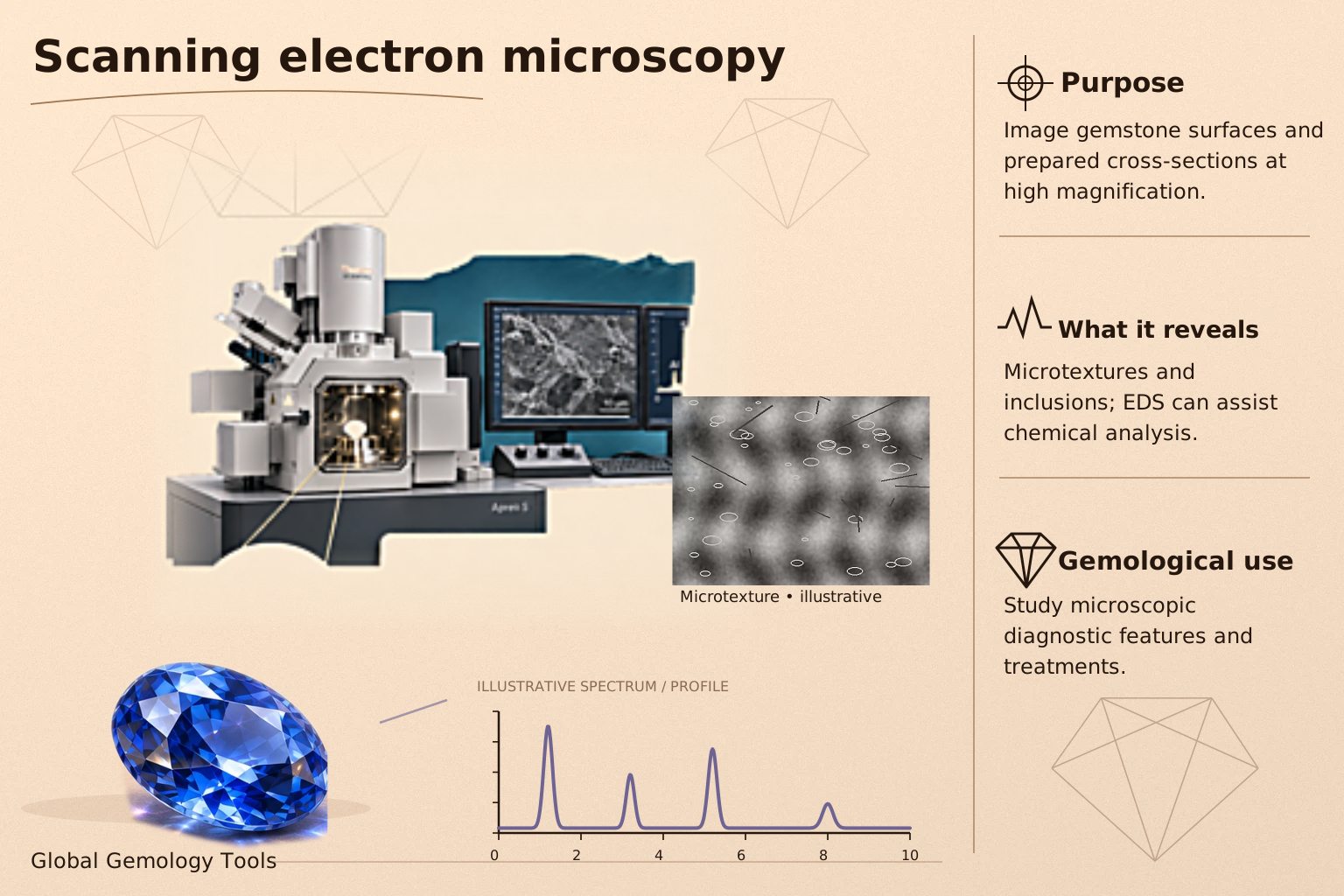
Scanning electron microscopy (SEM)
Bench spectrometer
Bench spectrometer
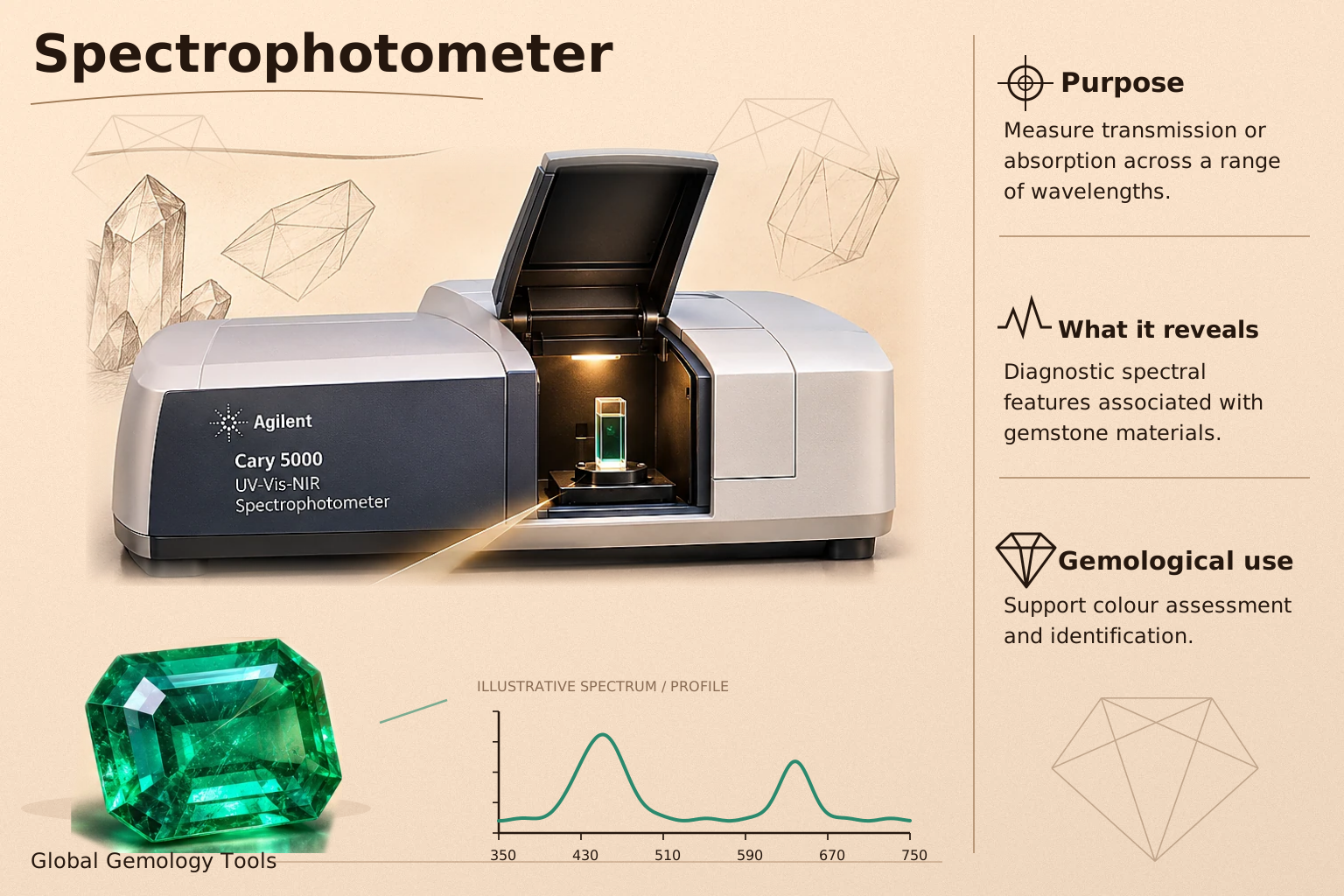
Spectrophotometer
Spectrophotometer
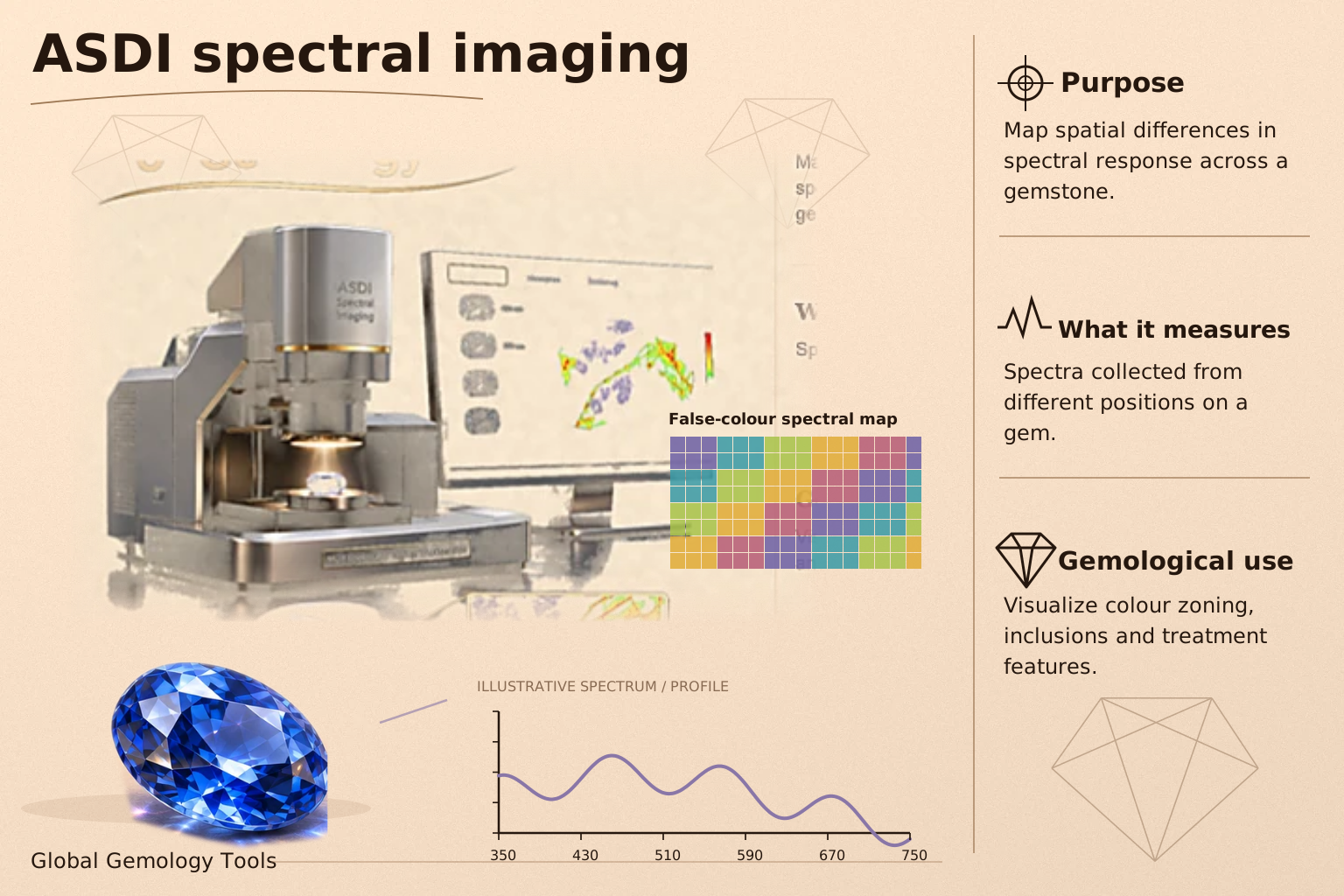
ASDI spectral imaging
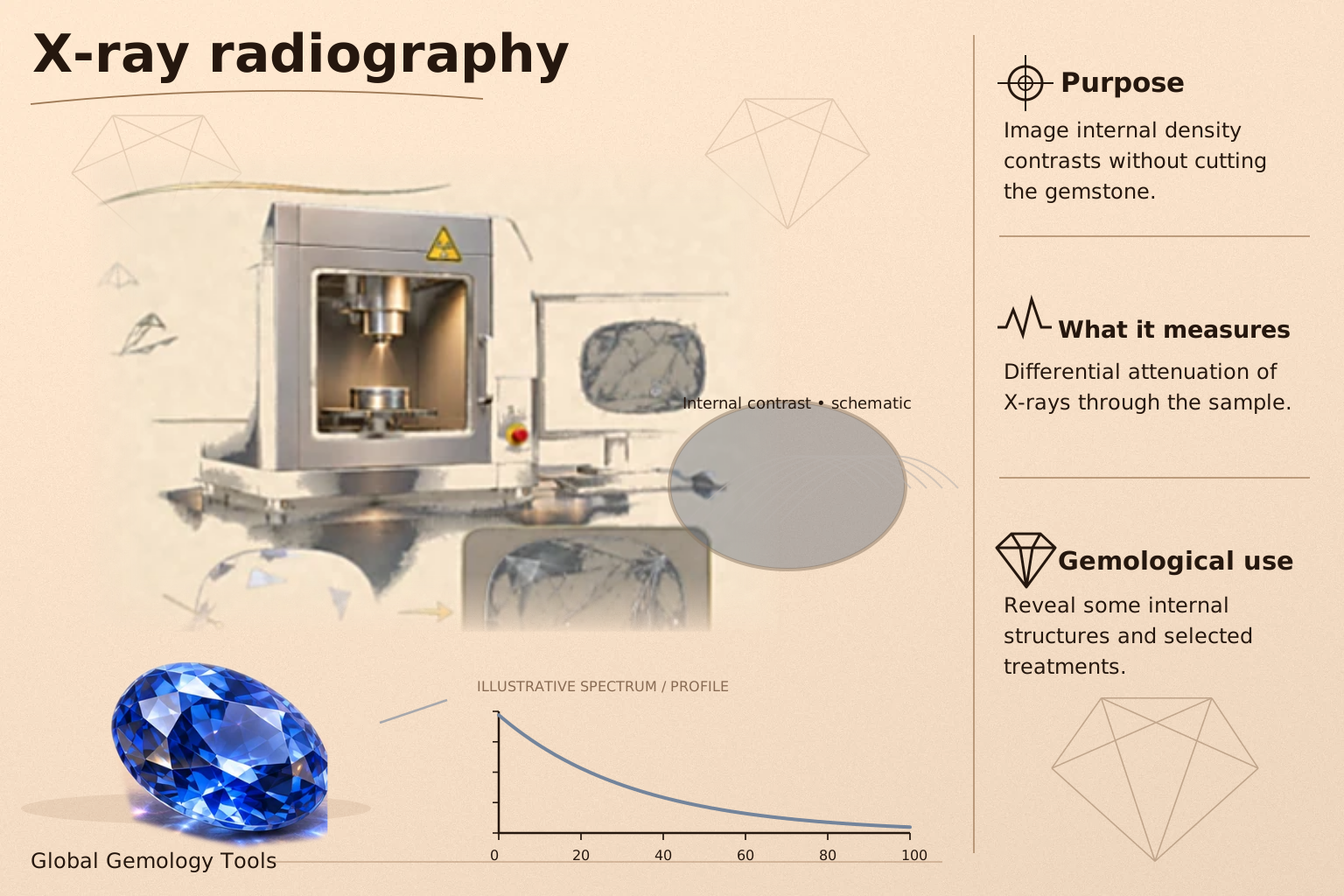
X-ray radiography
X-ray radiography
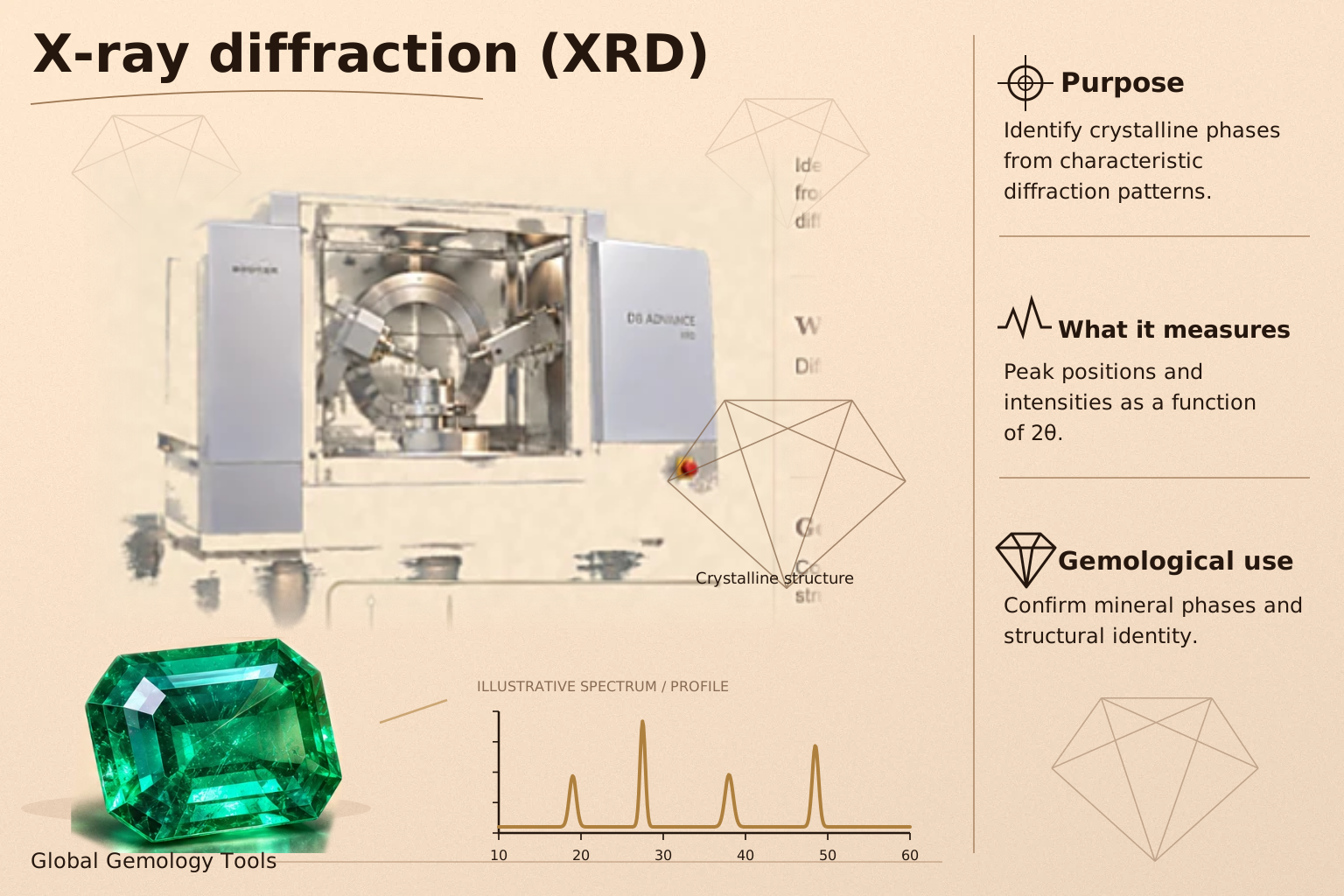
X-ray diffraction (XRD)
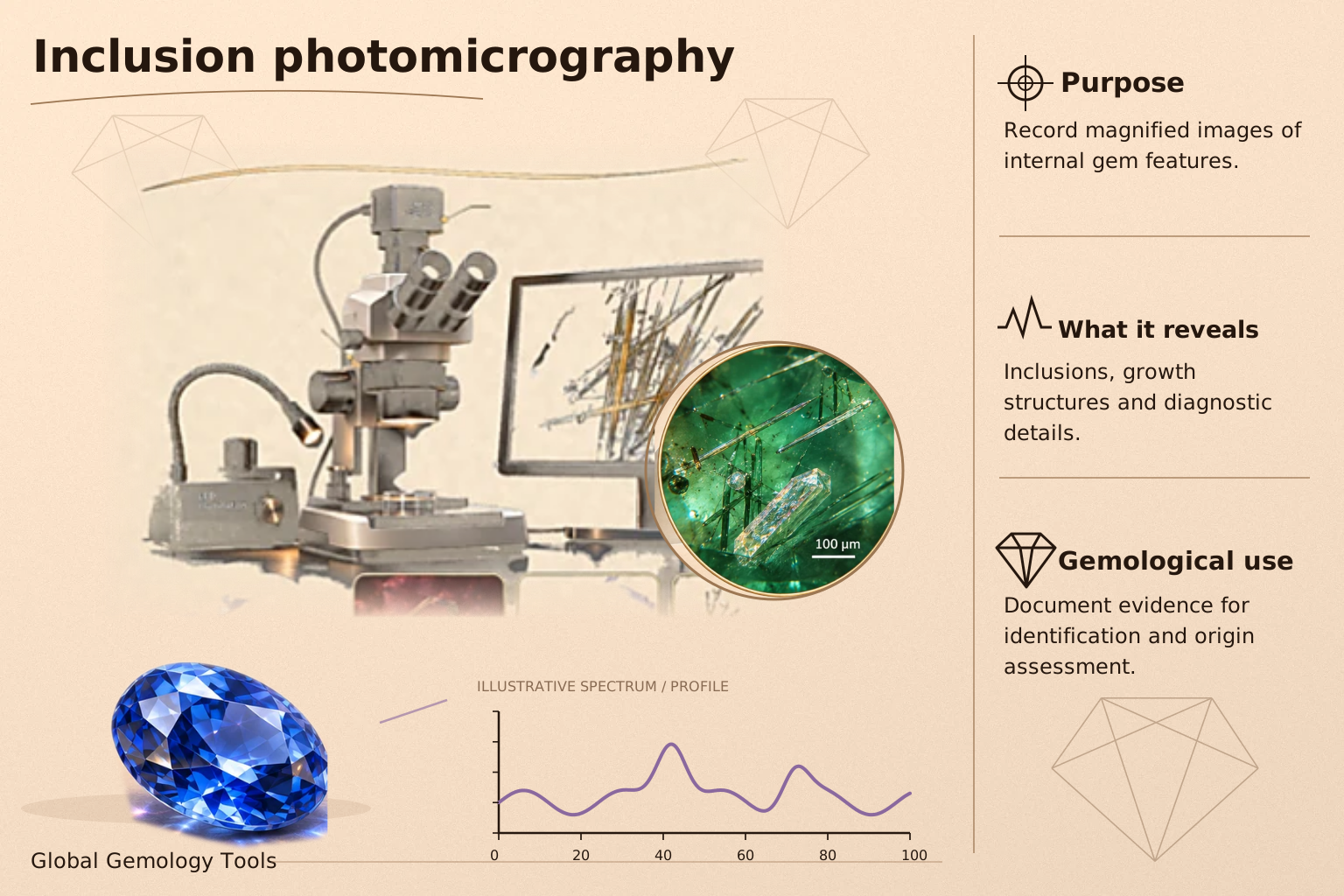
Inclusion photomicrography

Frequently asked questions

Can one laboratory instrument determine geographic origin?

Origin determination generally requires integrated evidence, reference datasets and expert interpretation.