Global Institute of Gemology • Gemology Tools
GIGA logoGIGAToolsGlobal Institute of Gemology
POLARISED LIGHT / OPTICAL CHARACTER

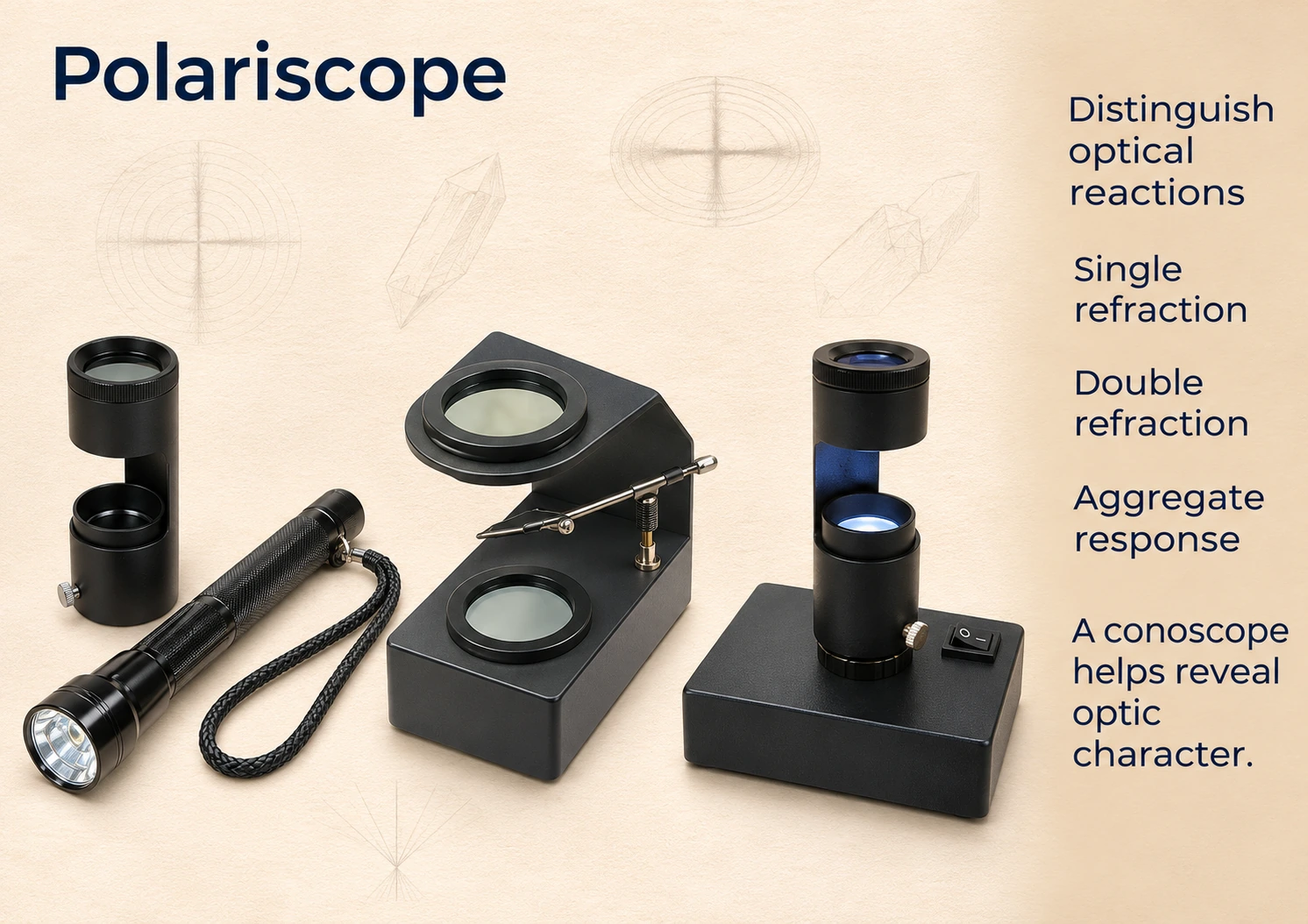
Polariscope

A polariscope uses two polarising filters to reveal the optical behaviour of a gemstone. Observing light changes as a stone rotates helps distinguish isotropic and anisotropic responses.

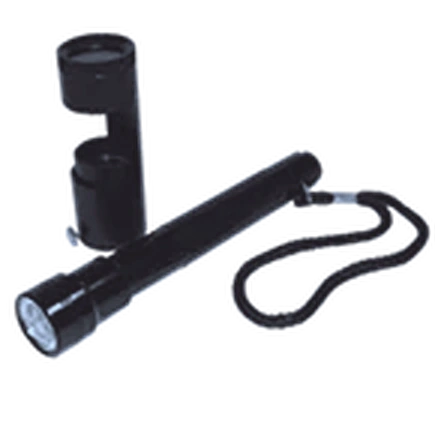
Polariscope instrument, cut out from the original photographic collection

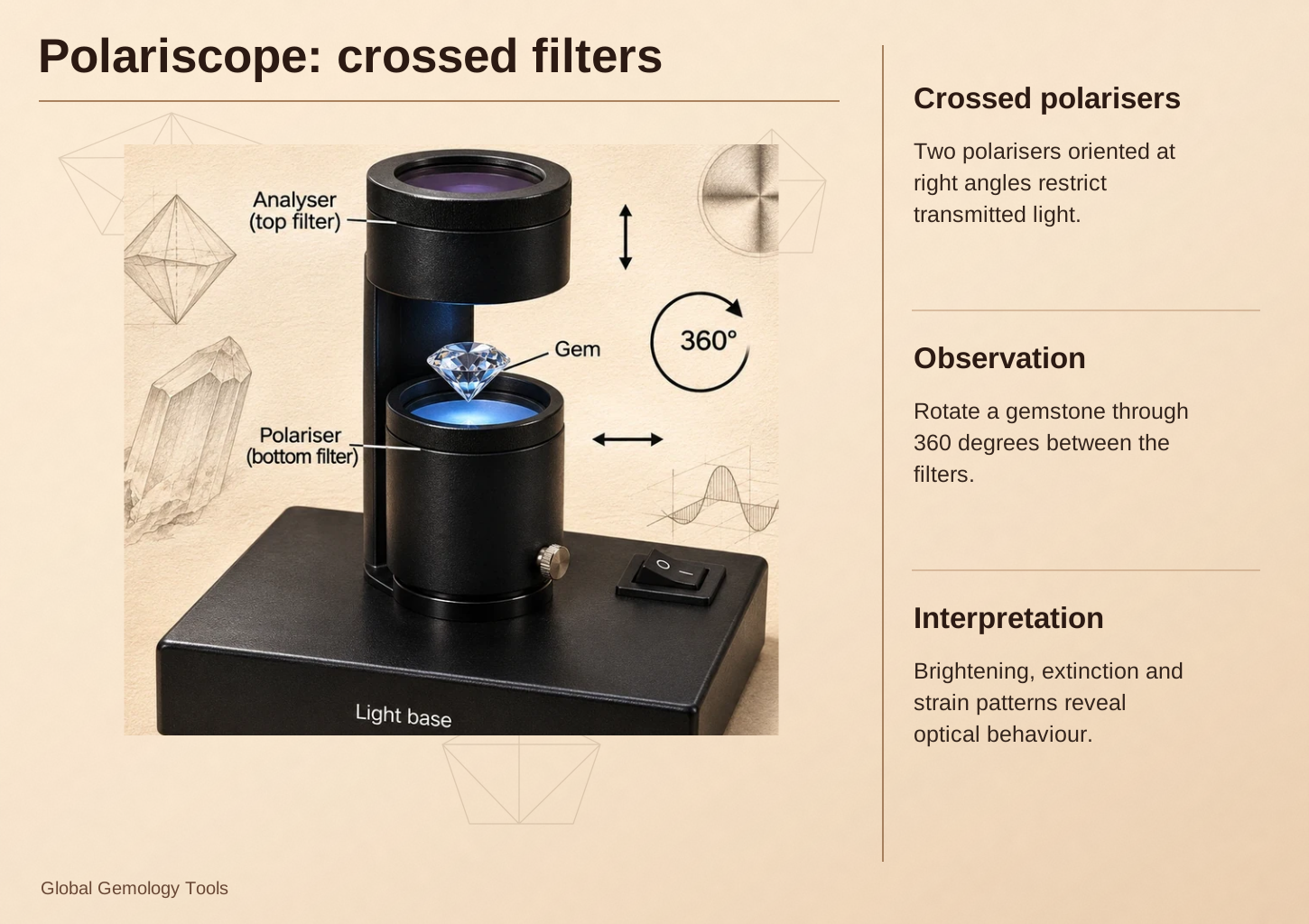
Crossed polarising filters

When the filters are crossed, little light passes in the absence of a specimen. A gemstone may modify the transmitted light depending on crystal structure and orientation.

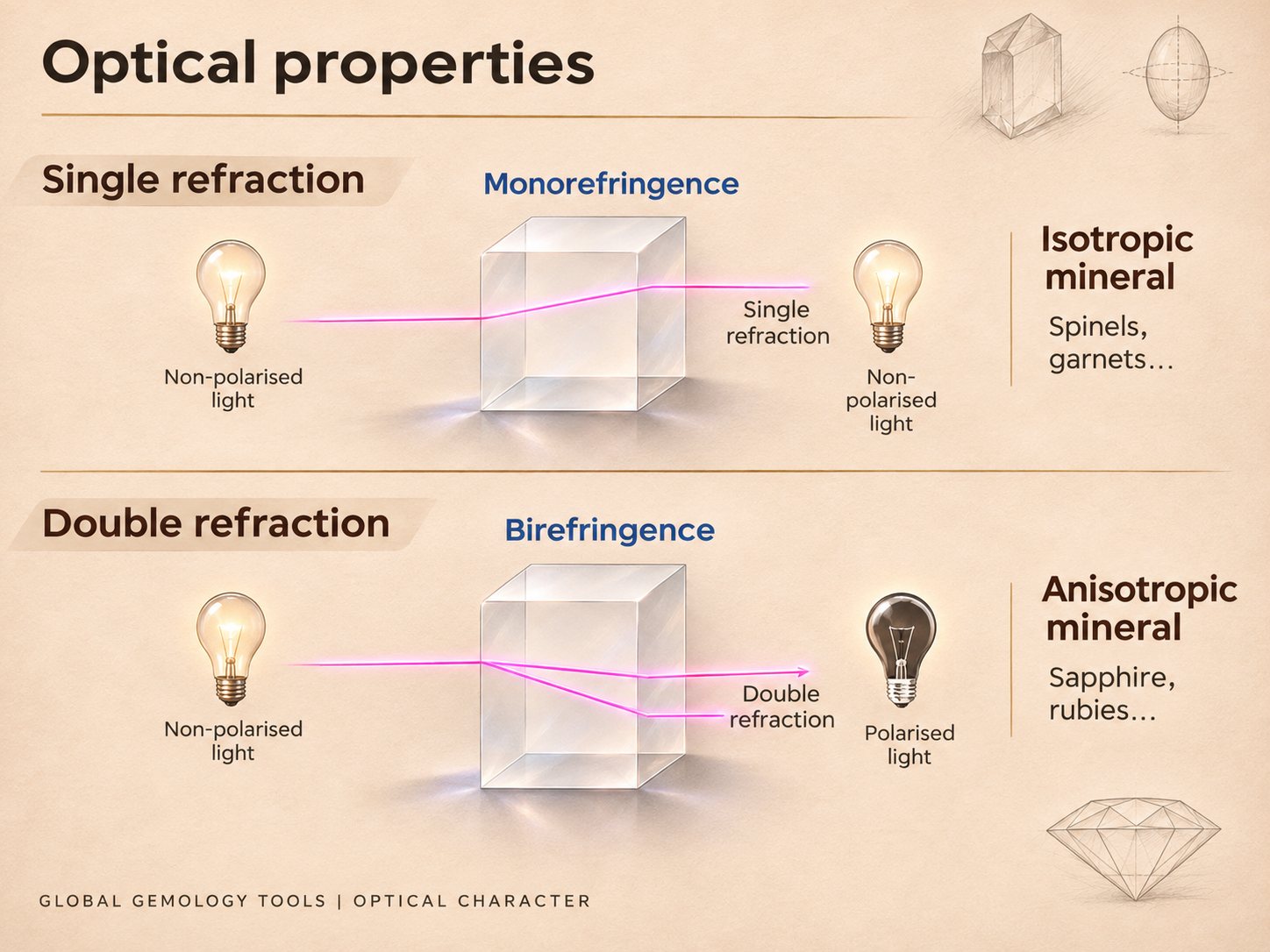
Single and double refraction

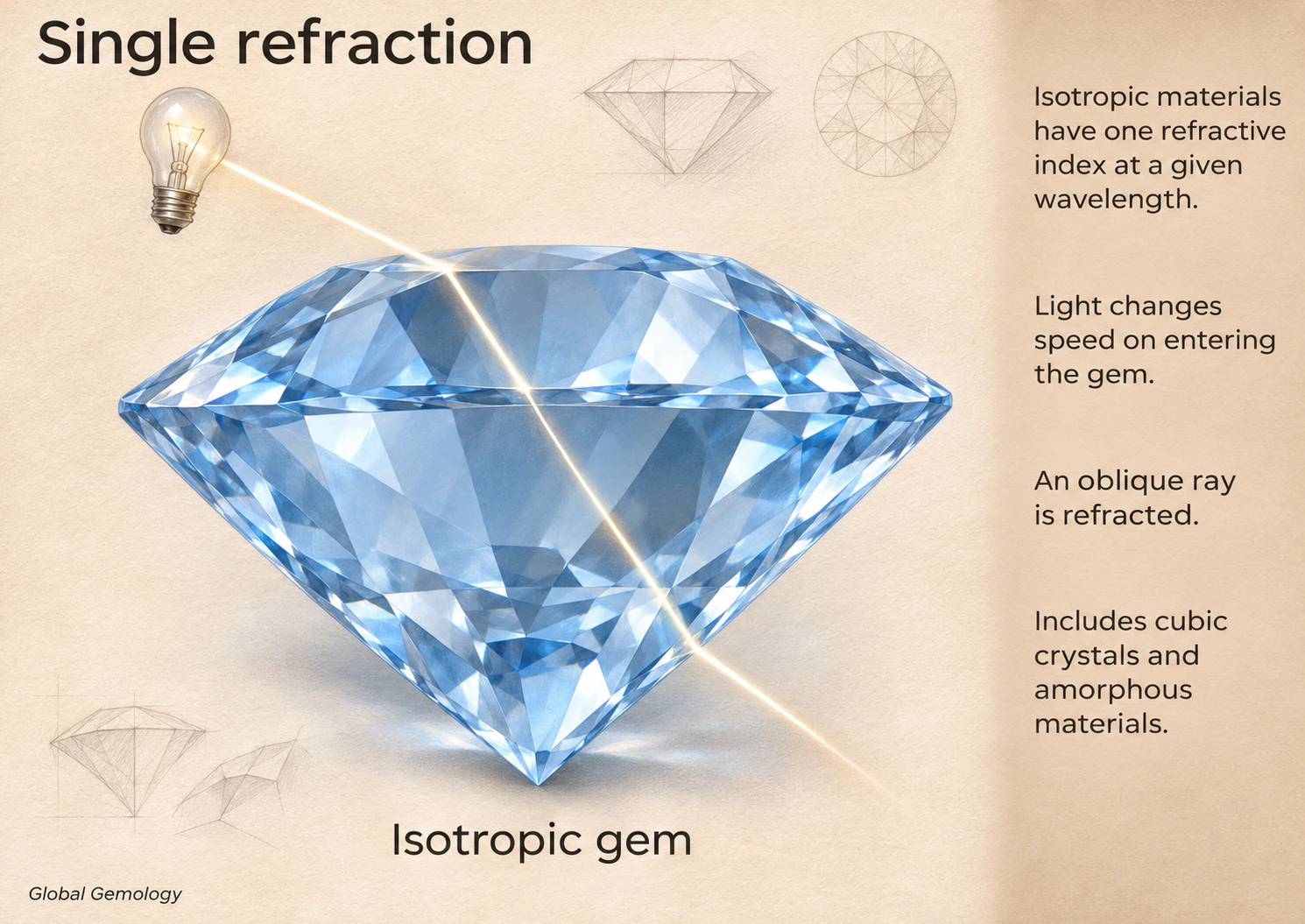
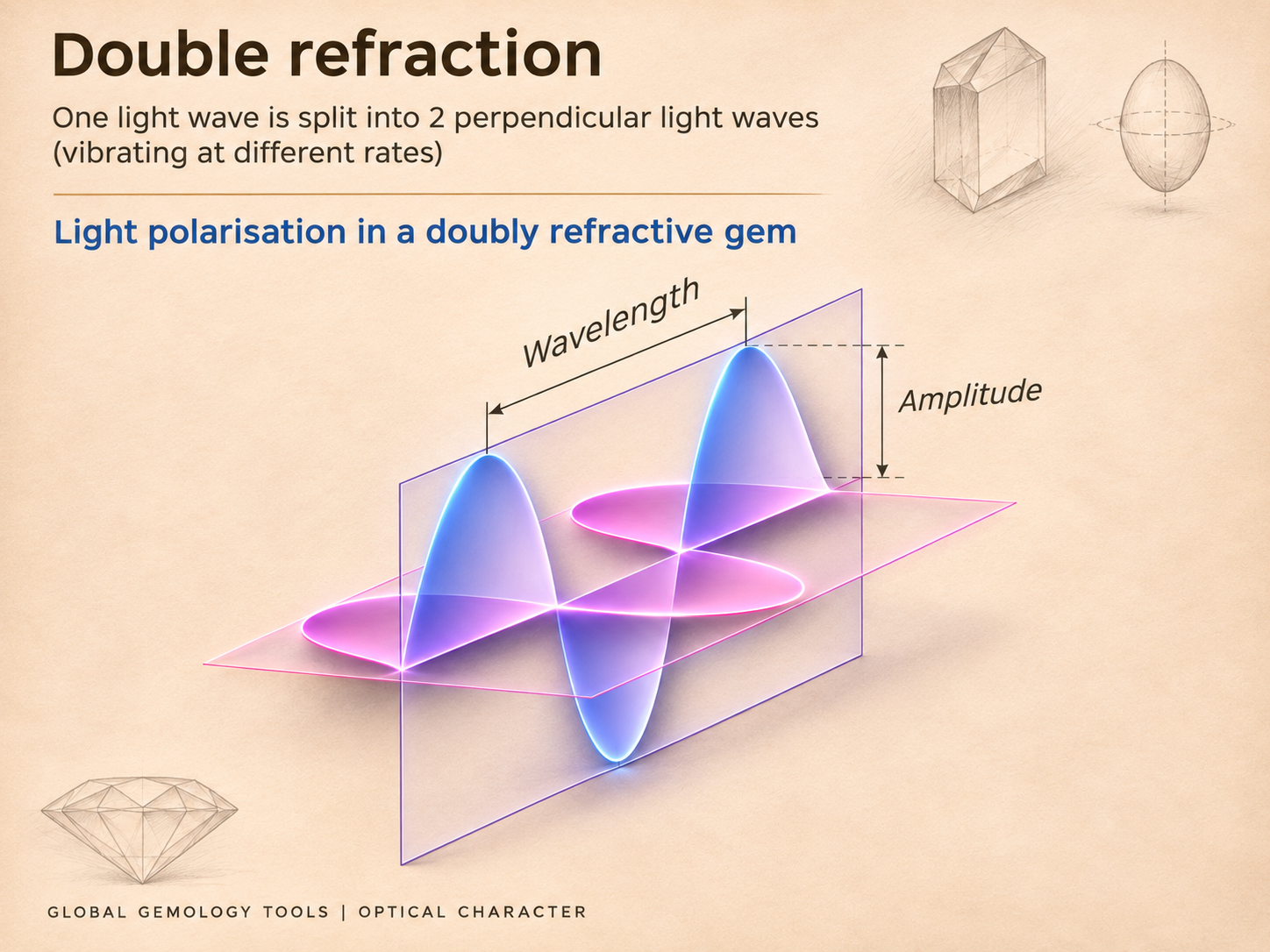
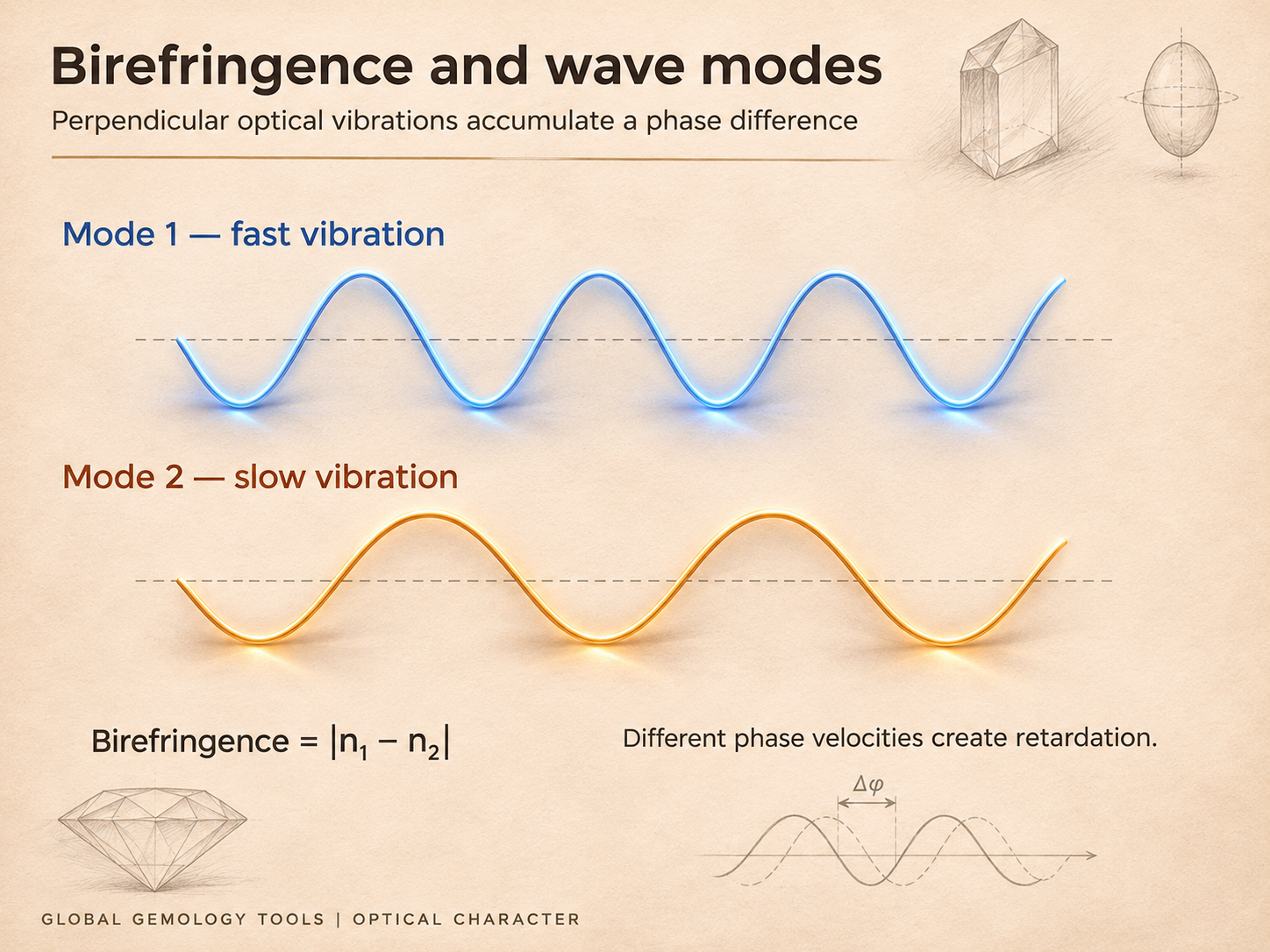
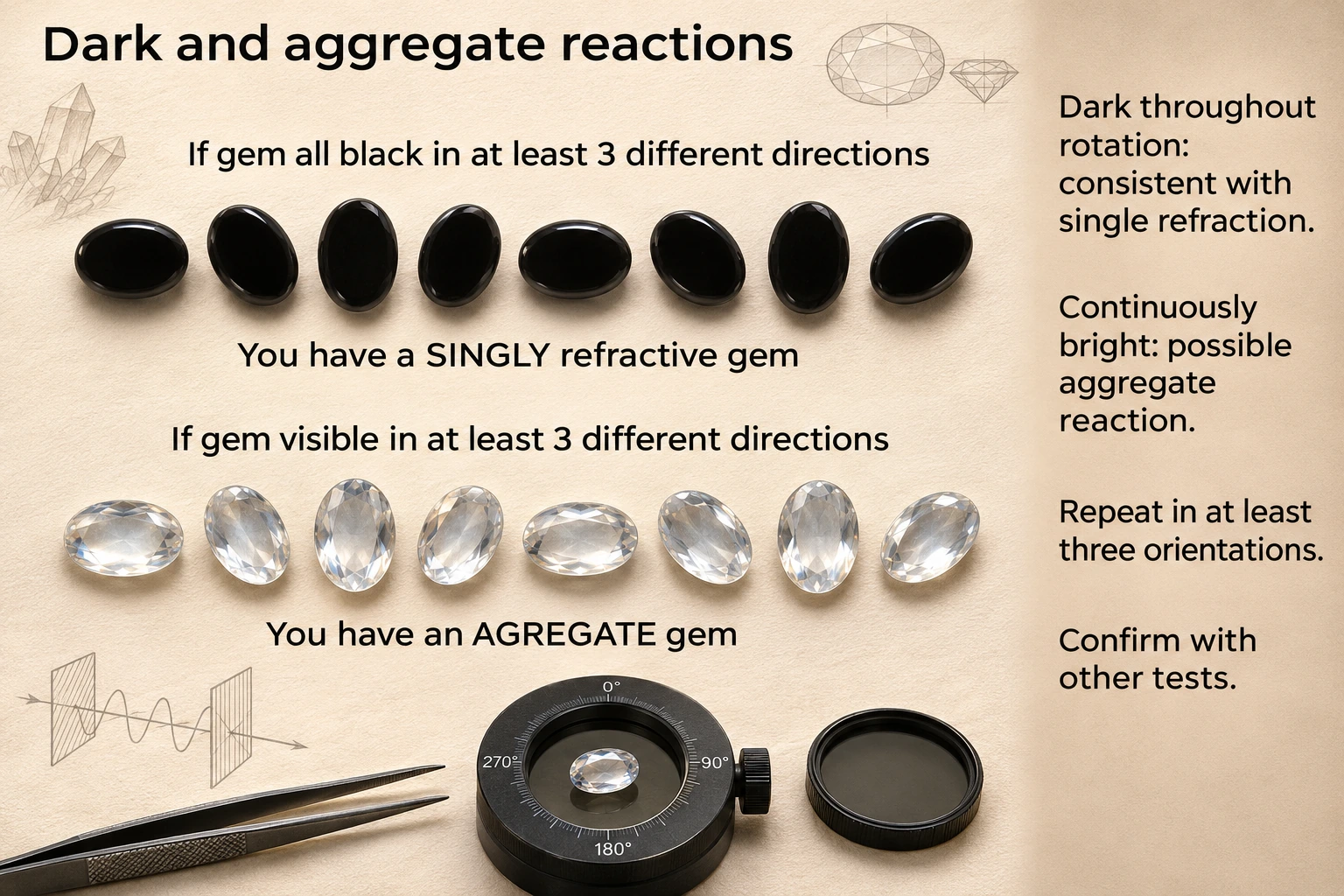
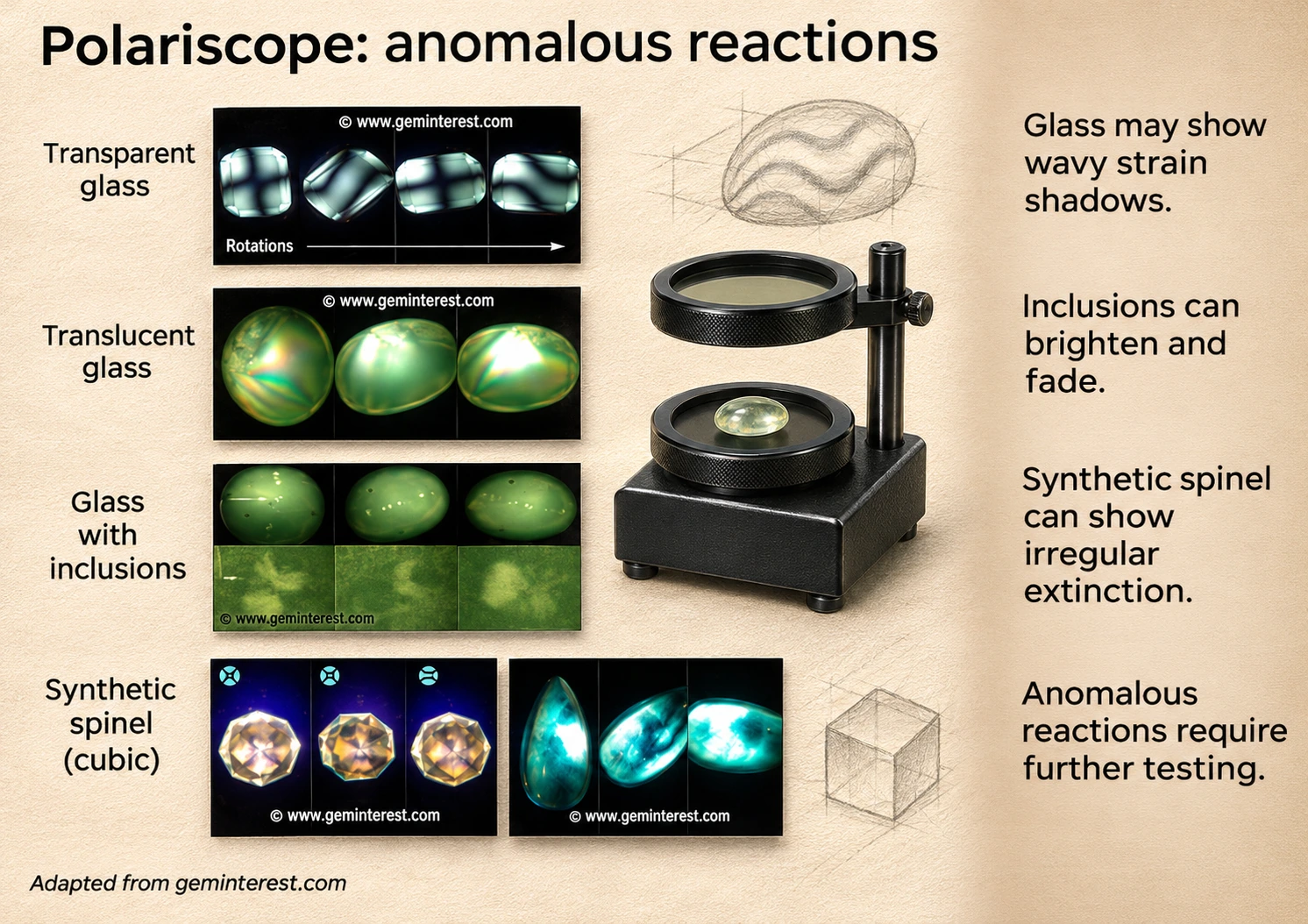
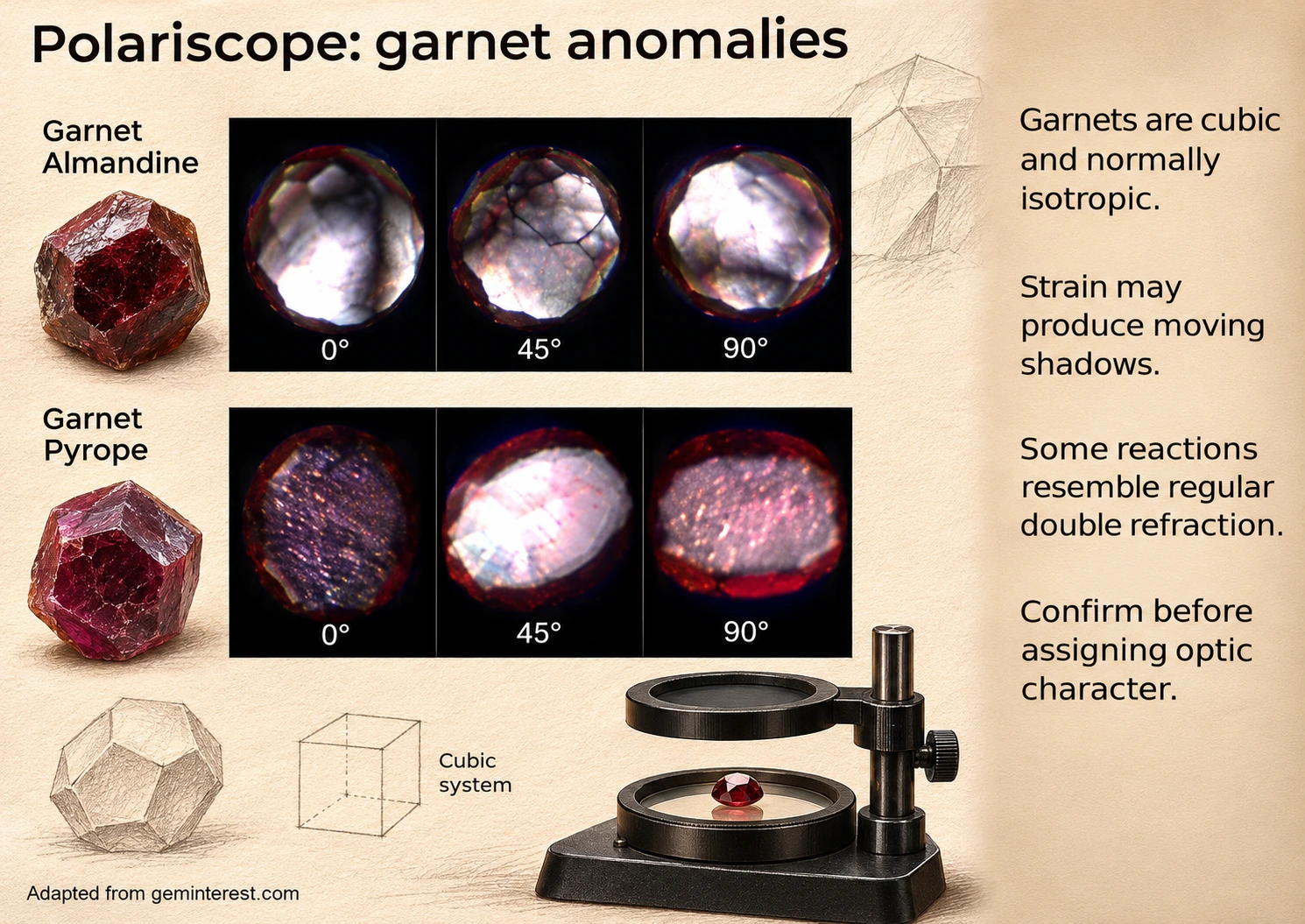
Ideally isotropic materials have one refractive index; anisotropic crystals generally support two optical vibration modes. Real-world strain, inclusions and twinning can complicate the pattern.

Reading a response

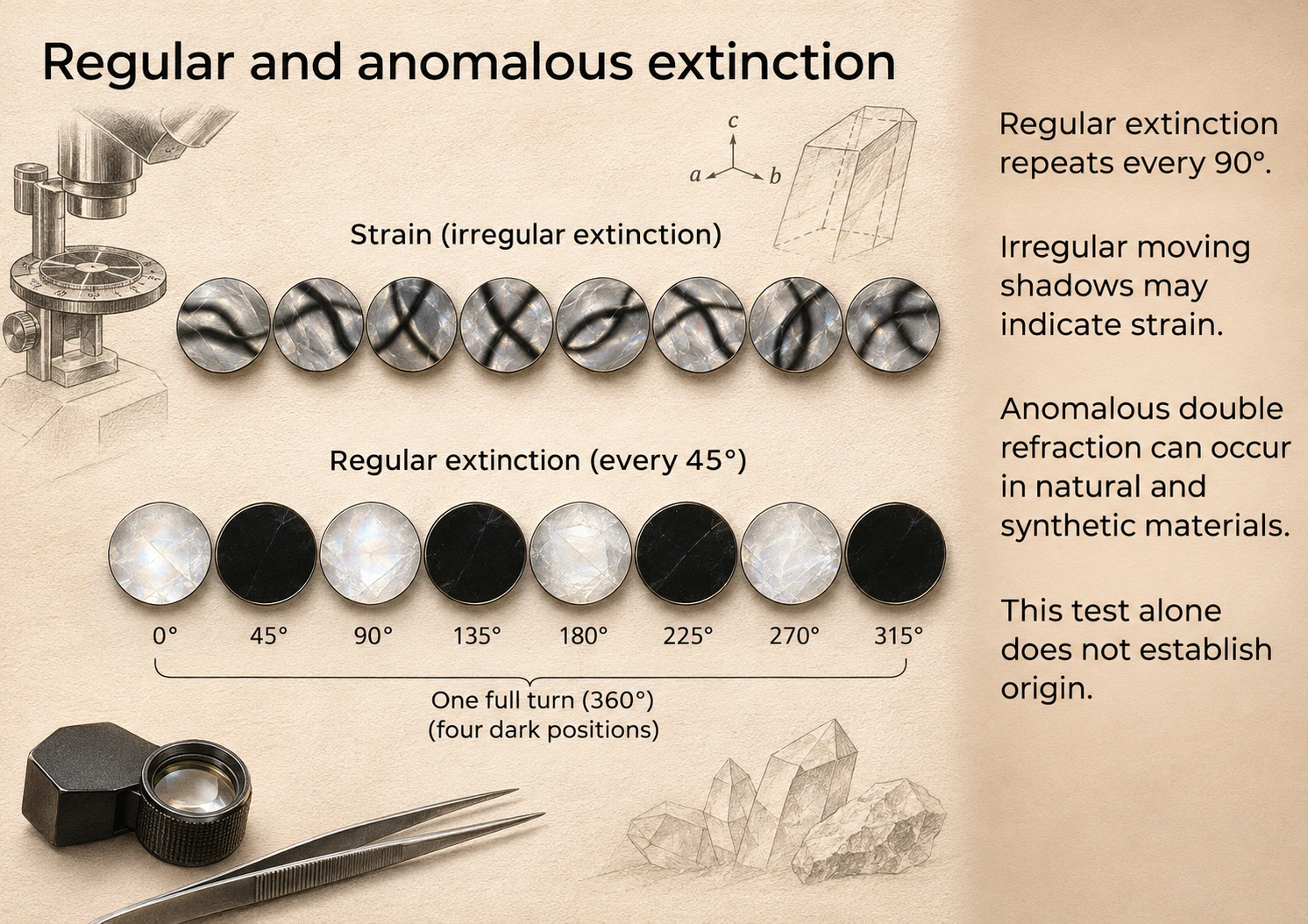
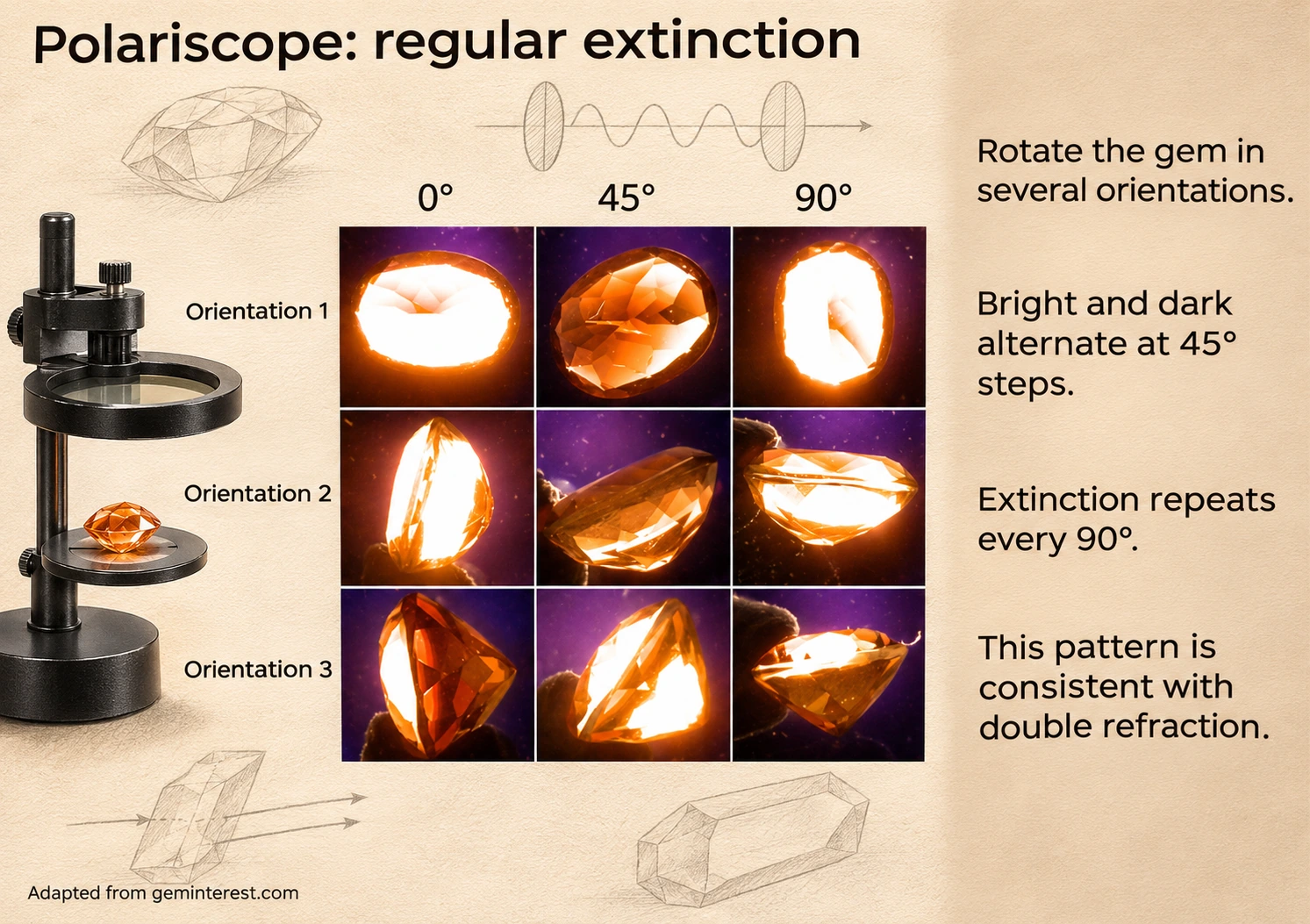
Rotate the sample through a full revolution and note the intensity, anomalous extinction and any interference colours. Interpret the response alongside other tests, never in isolation.

Illustrated guide
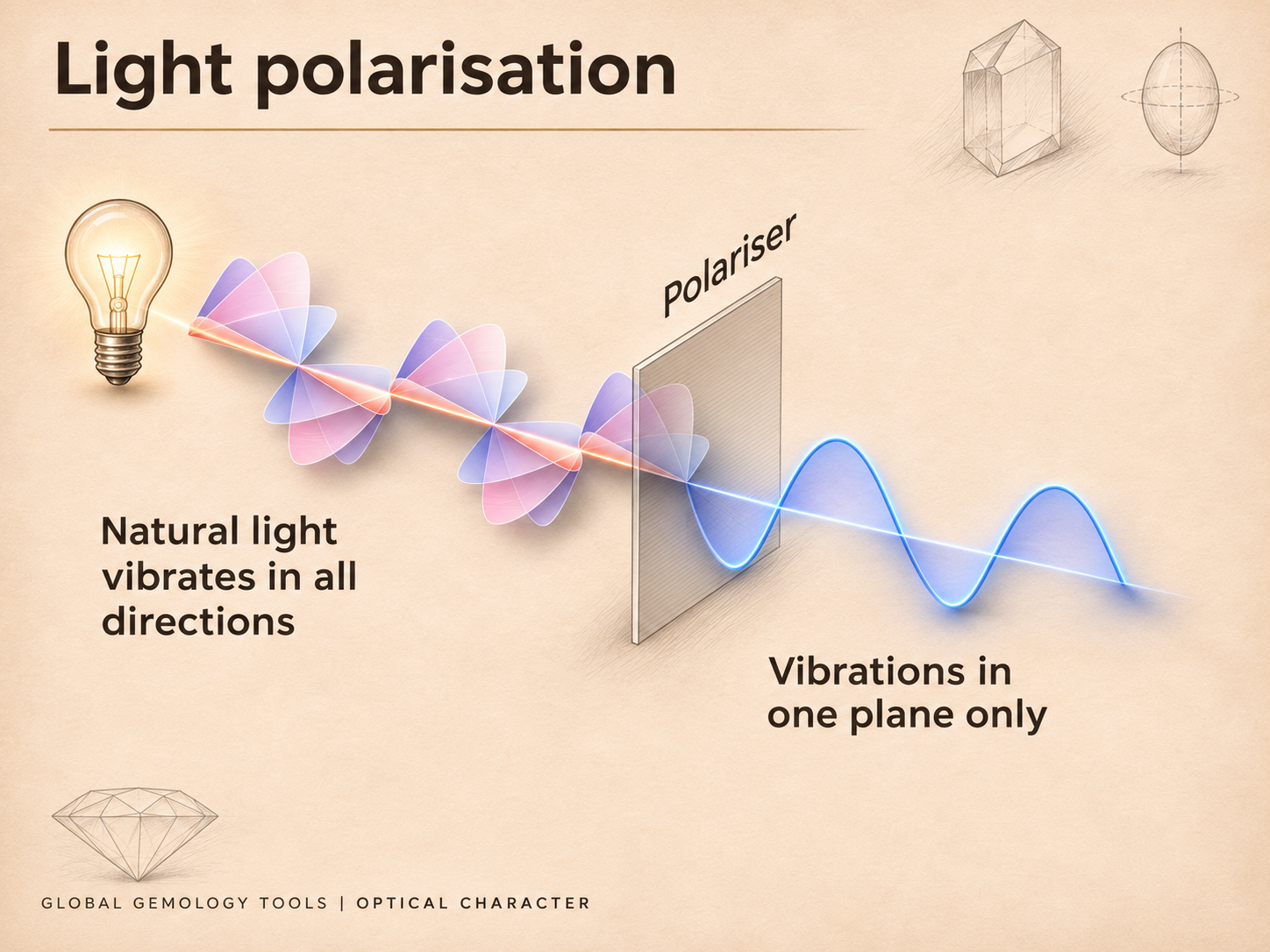
Light polarisation
Light polarisation
Optical properties: single and double refraction
Single refraction in an isotropic gemstone — illustrated gemology guide
Single refraction in an isotropic gemstone
Double refraction: perpendicular optical modes
Birefringence and wave modes
Three polariscopes for observing light — illustrated gemology guide
Three polariscopes for observing light
Crossed polarising filters — illustrated gemology guide
Crossed polarising filters
Dark and aggregate reactions — illustrated gemology guide
Dark and aggregate reactions
Regular and anomalous extinction — illustrated gemology guide
Regular and anomalous extinction
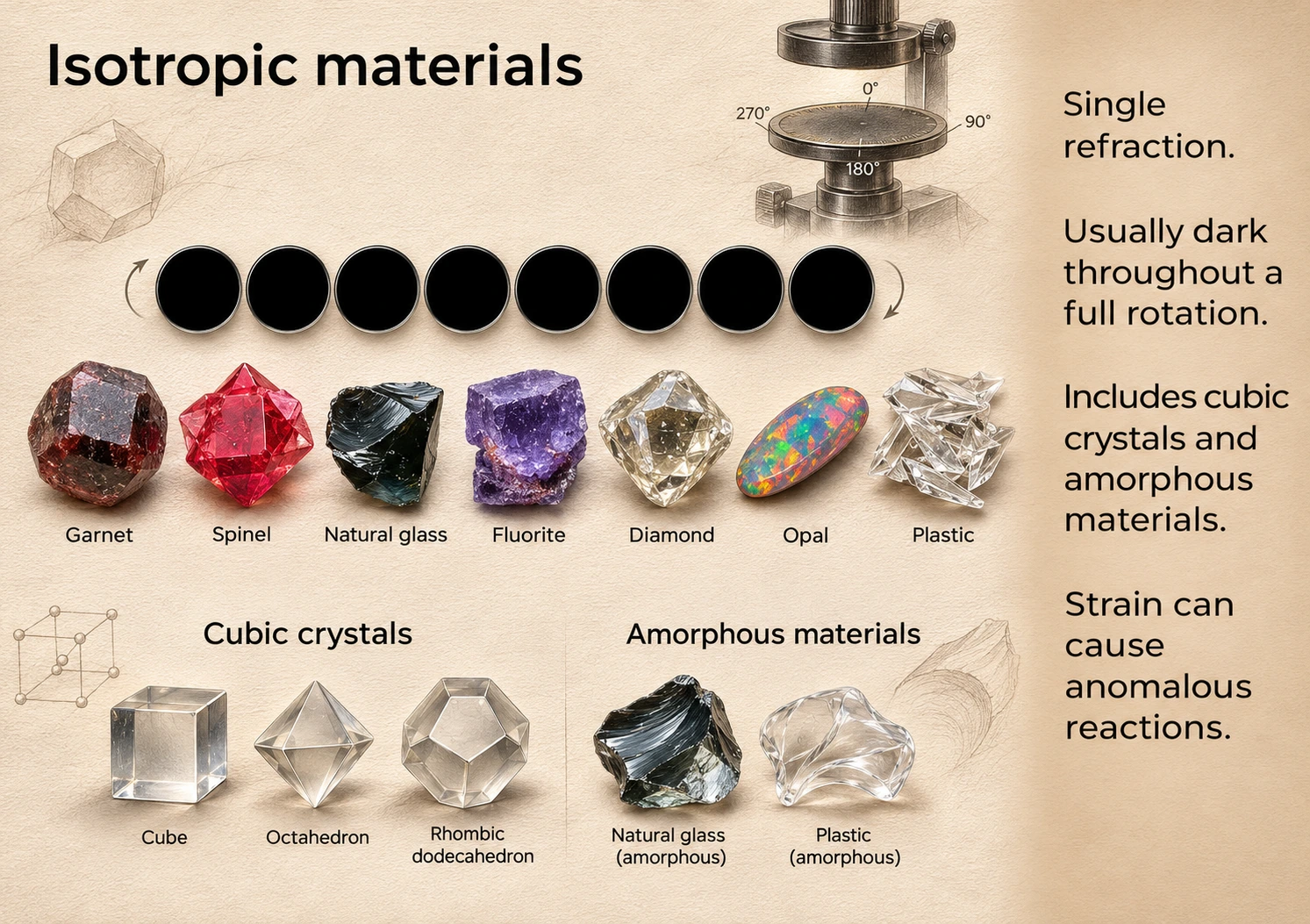
Isotropic materials — illustrated gemology guide
Isotropic materials
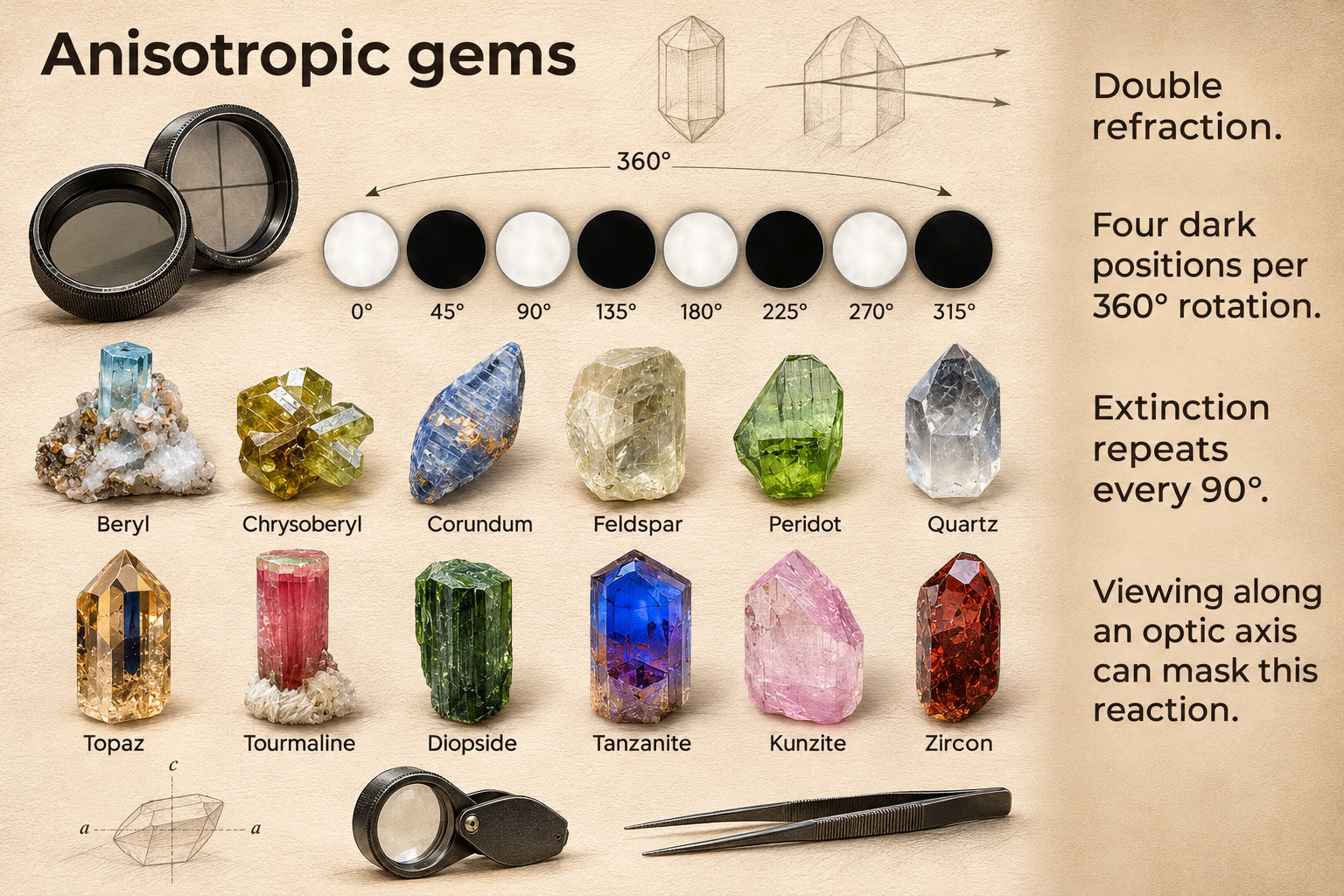
Anisotropic gems and optical extinction — illustrated gemology guide
Anisotropic gems and optical extinction
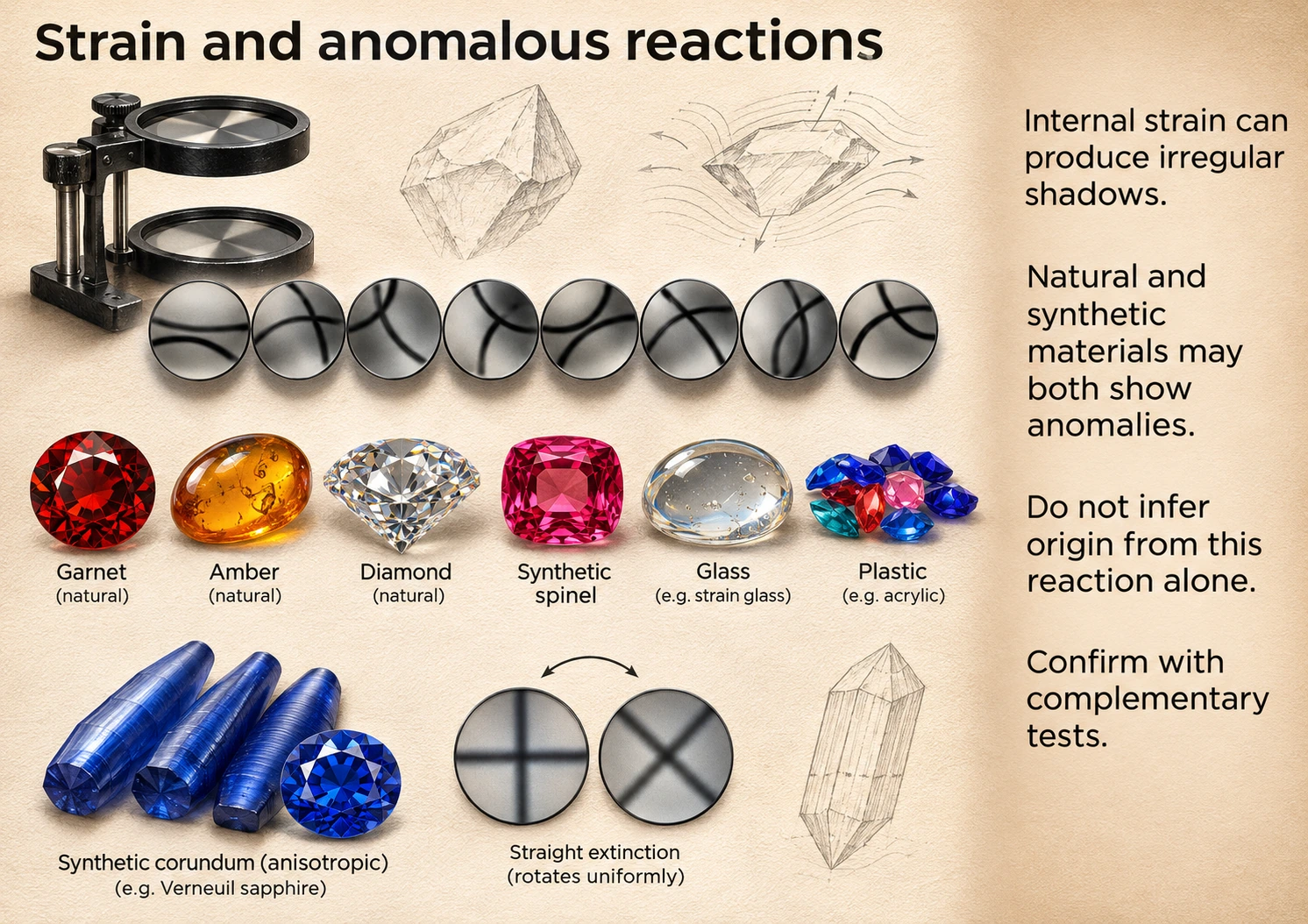
Strain and anomalous reactions — illustrated gemology guide
Strain and anomalous reactions
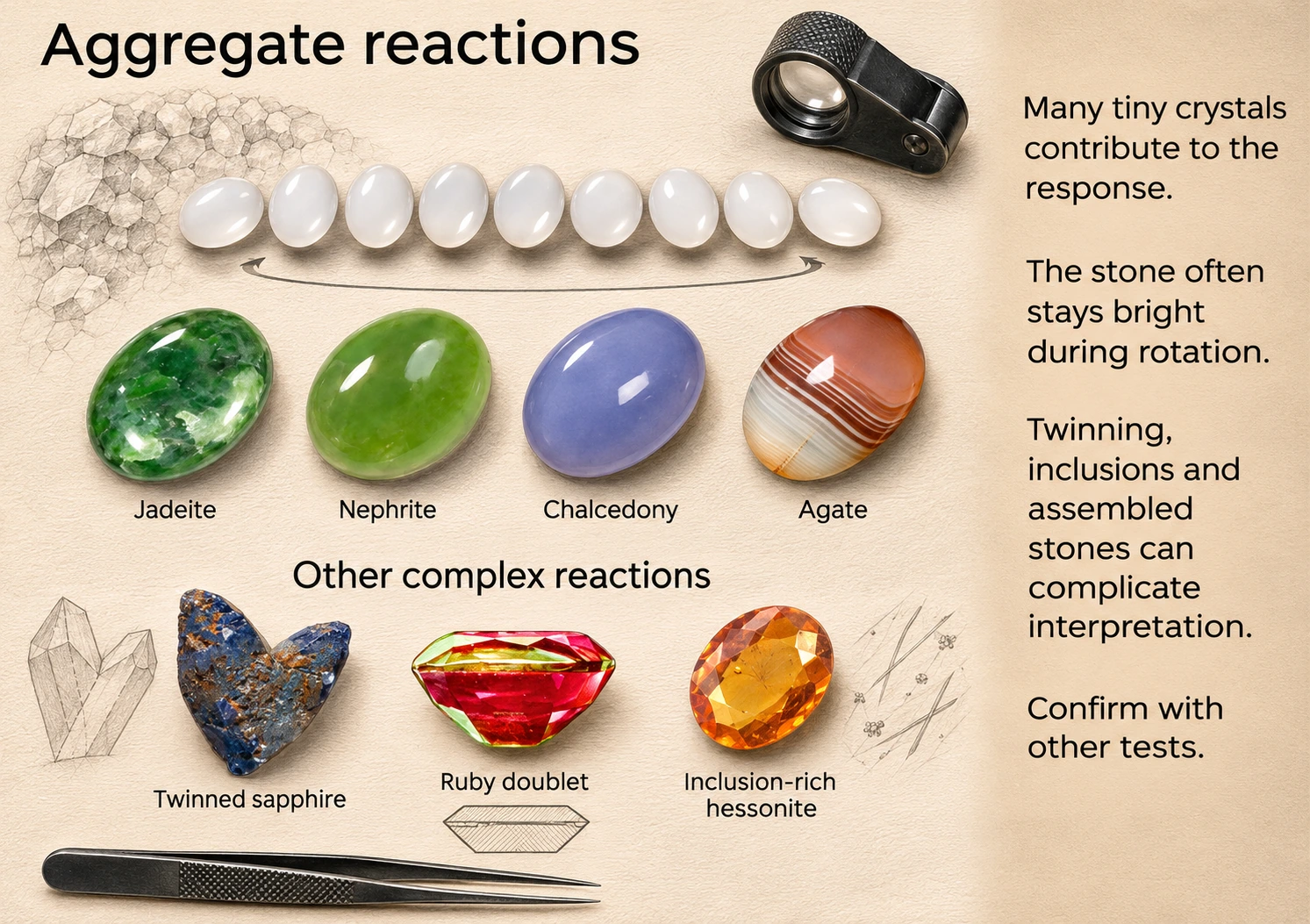
Aggregate reactions in gemology — illustrated gemology guide
Aggregate reactions in gemology
Regular extinction — illustrated gemology guide
Regular extinction
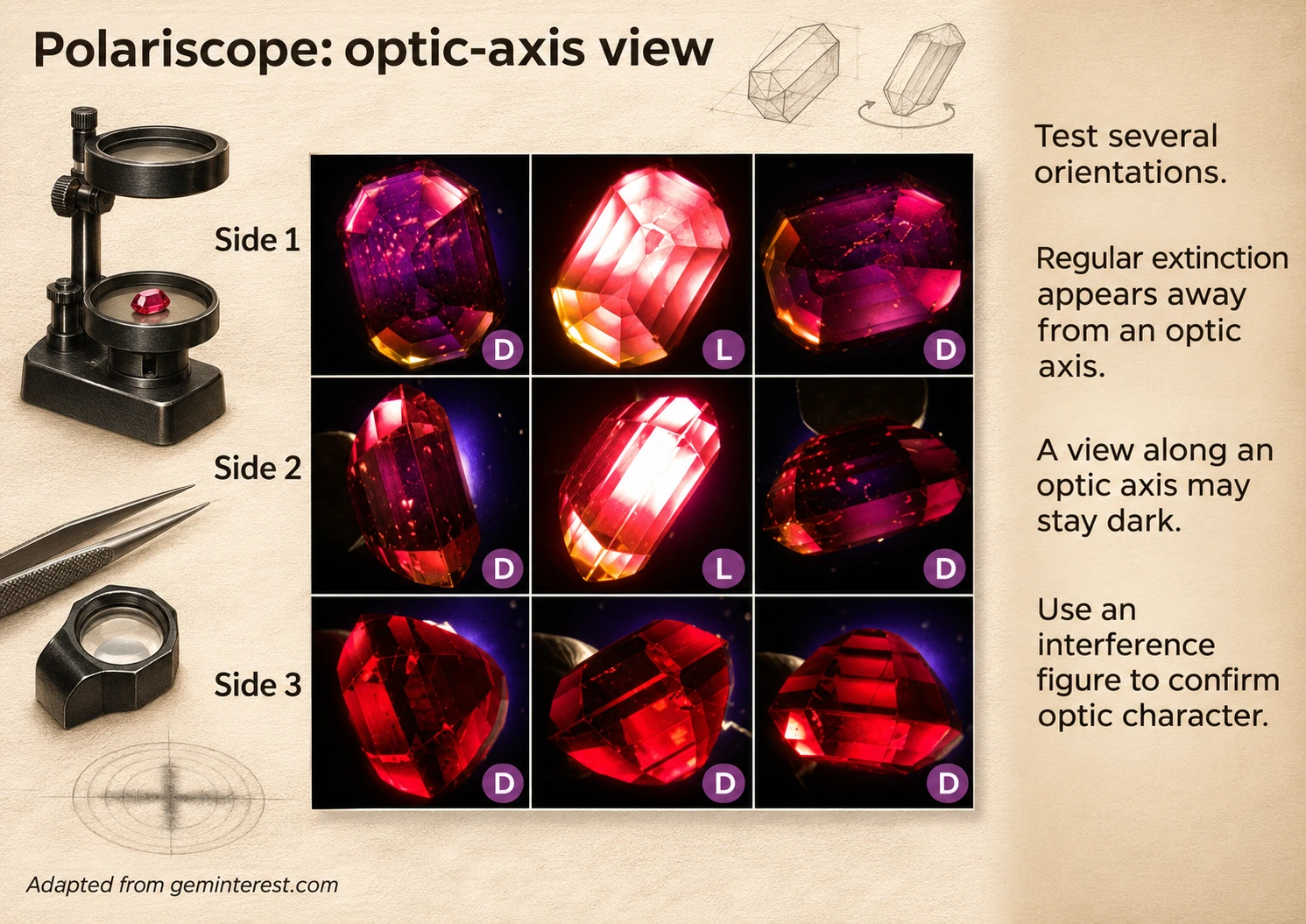
Viewing along the optic axis — illustrated gemology guide
Viewing along the optic axis
Anomalous polariscope reactions — illustrated gemology guide
Anomalous polariscope reactions
Anomalous reactions in garnets — illustrated gemology guide
Anomalous reactions in garnets
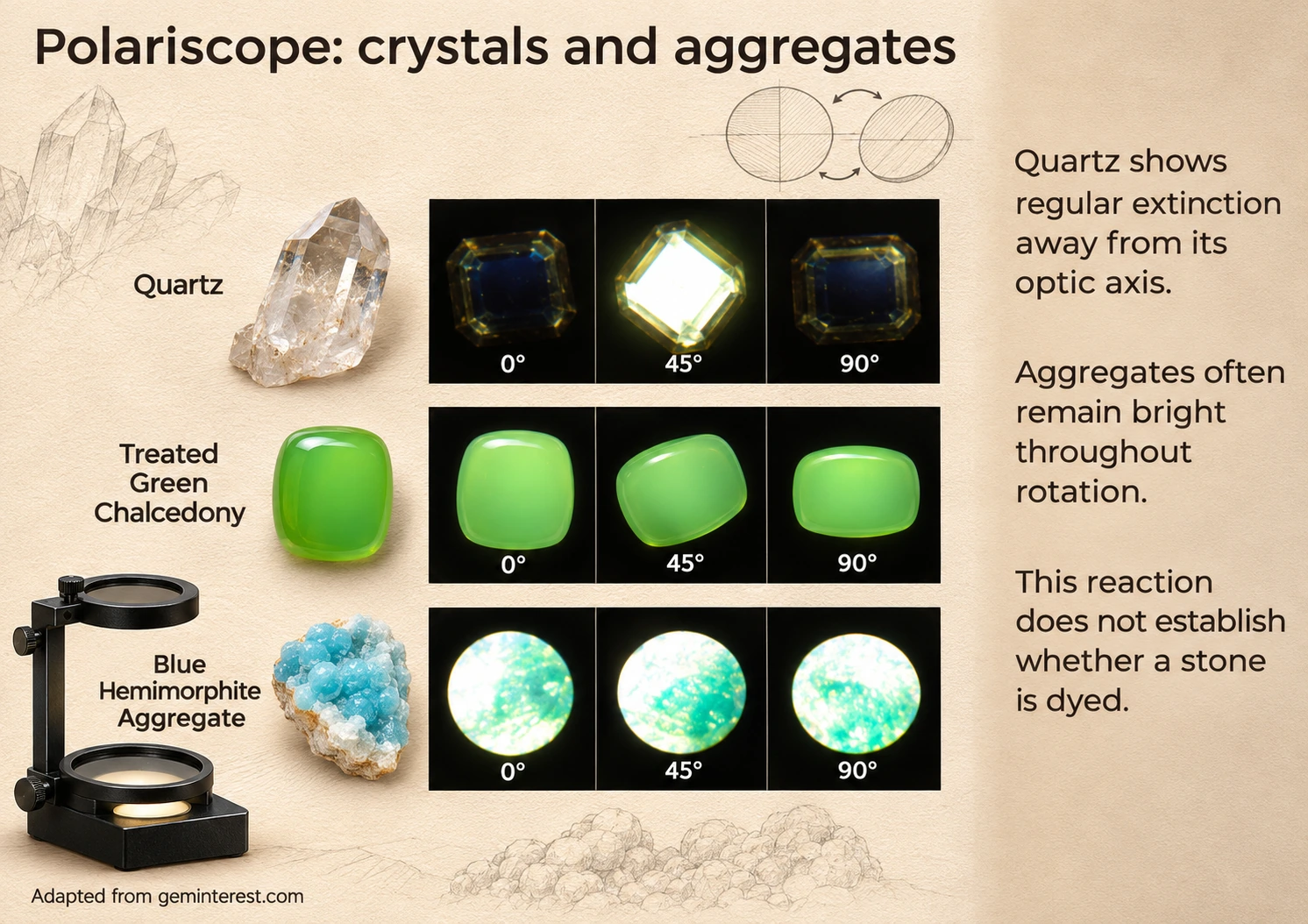
Crystals and aggregates — illustrated gemology guide
Crystals and aggregates

Frequently asked questions

Can a polariscope identify a gem on its own?

No, it helps determine optical character and provides evidence that should be combined with other properties.